OYEZ OYEZ OYEZ!
2026 Community Project
Leek, Staffordshire, UK
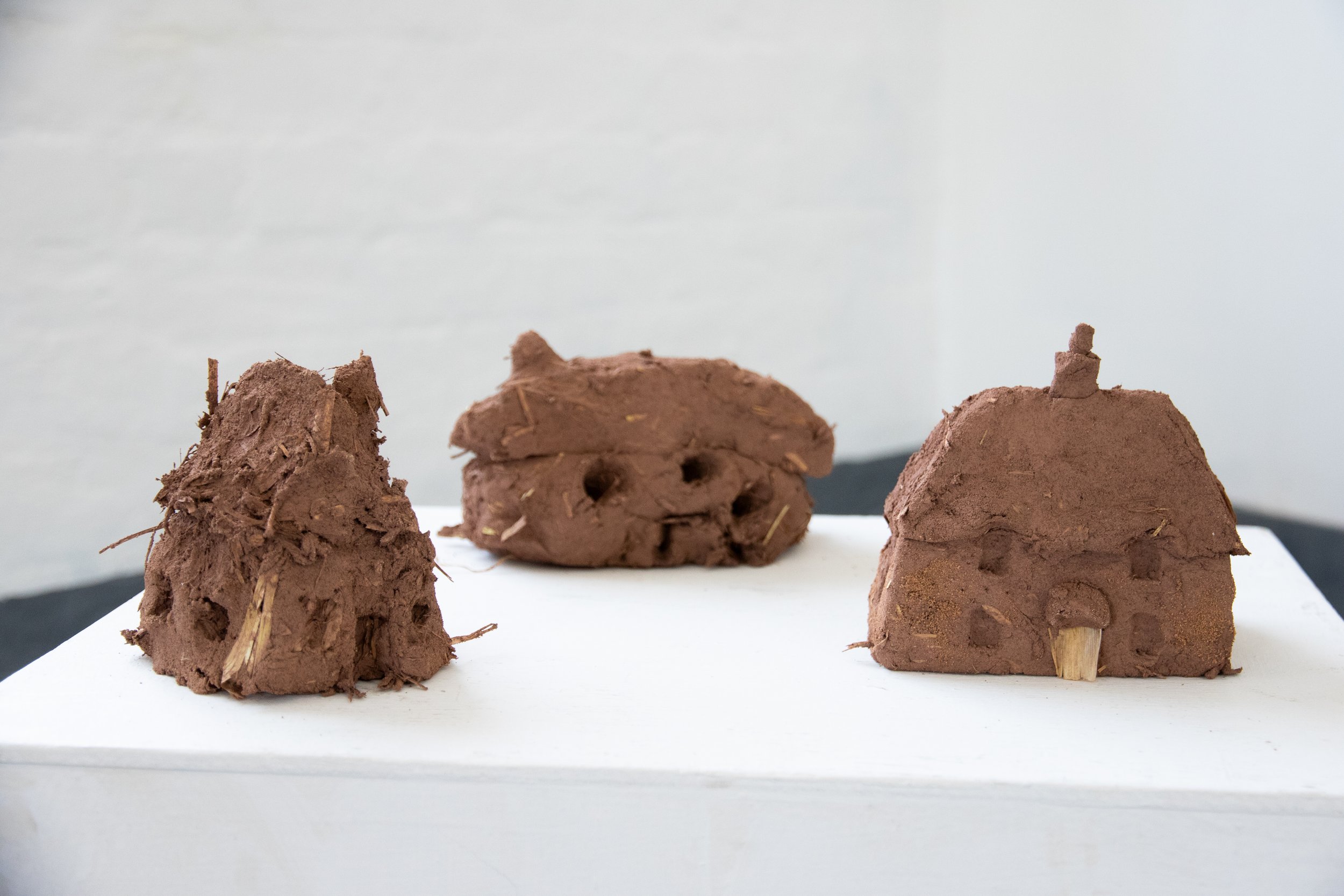
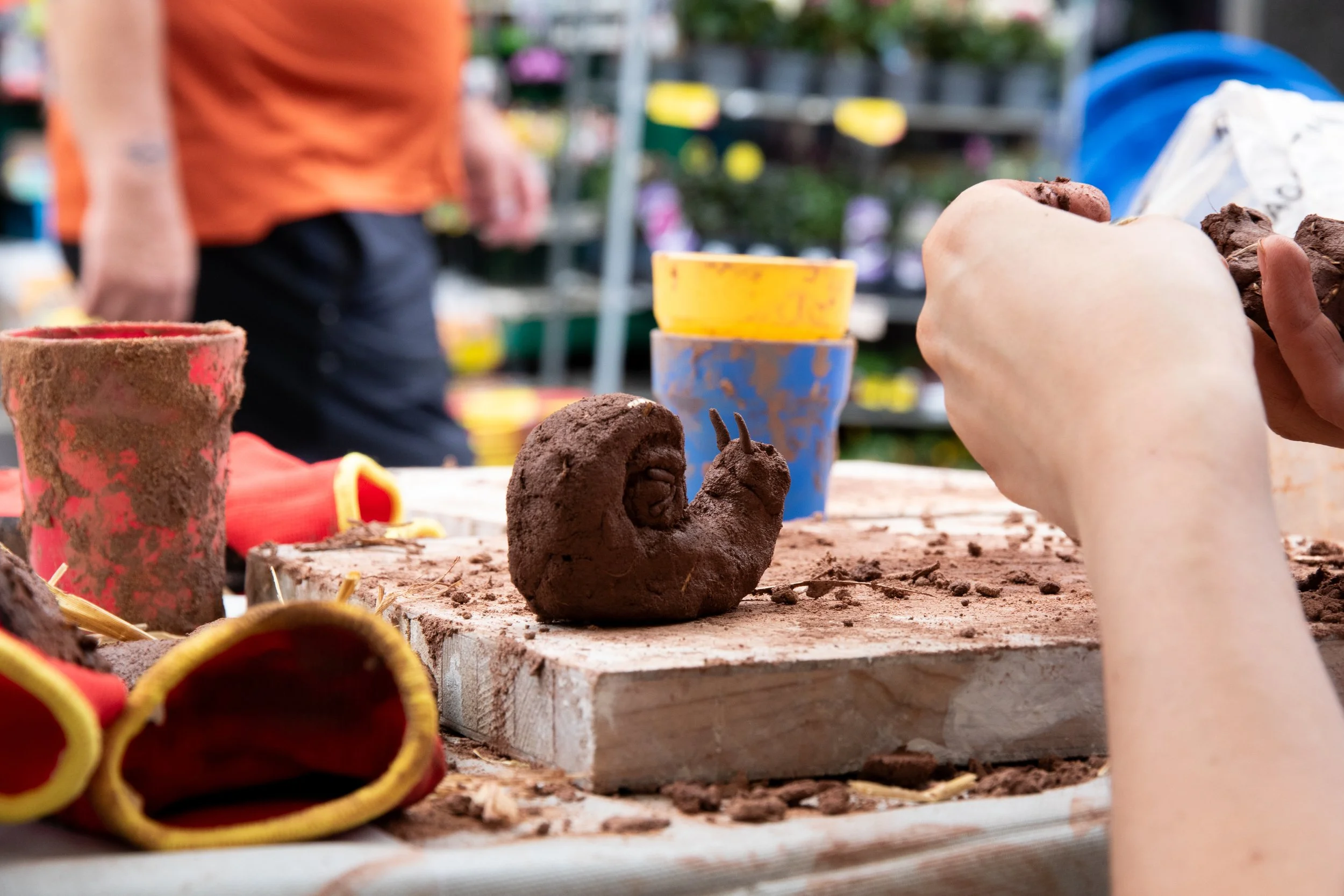
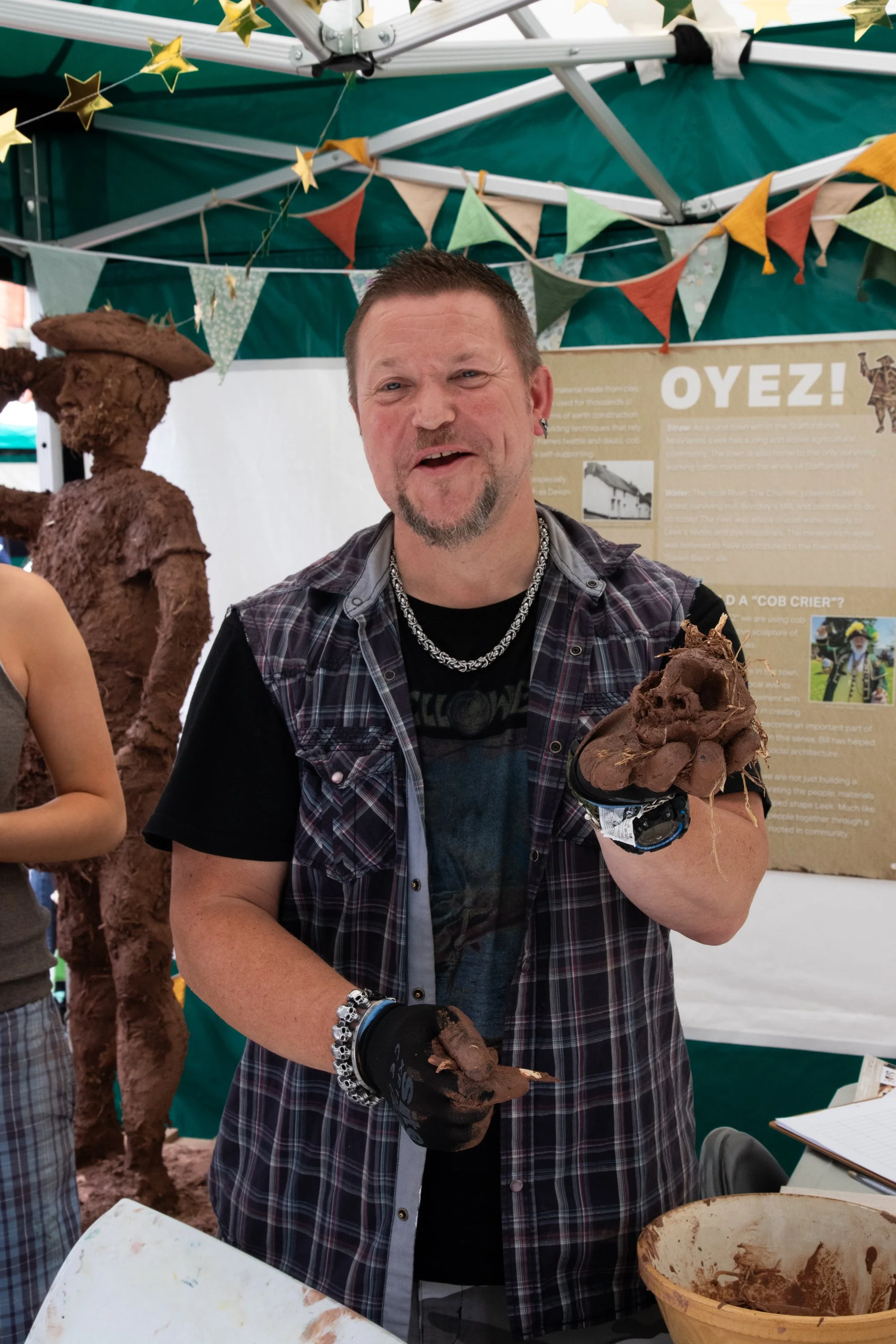
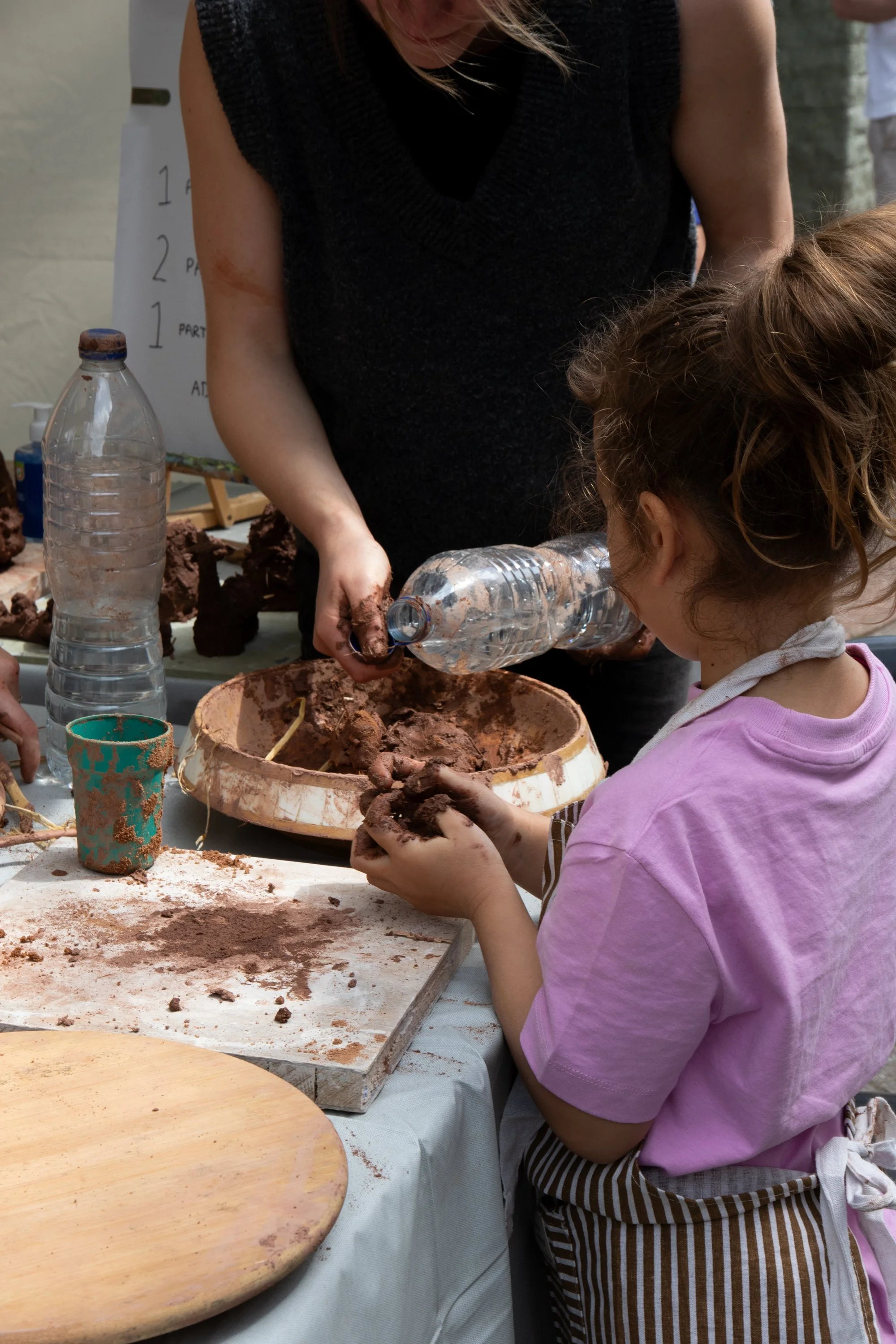
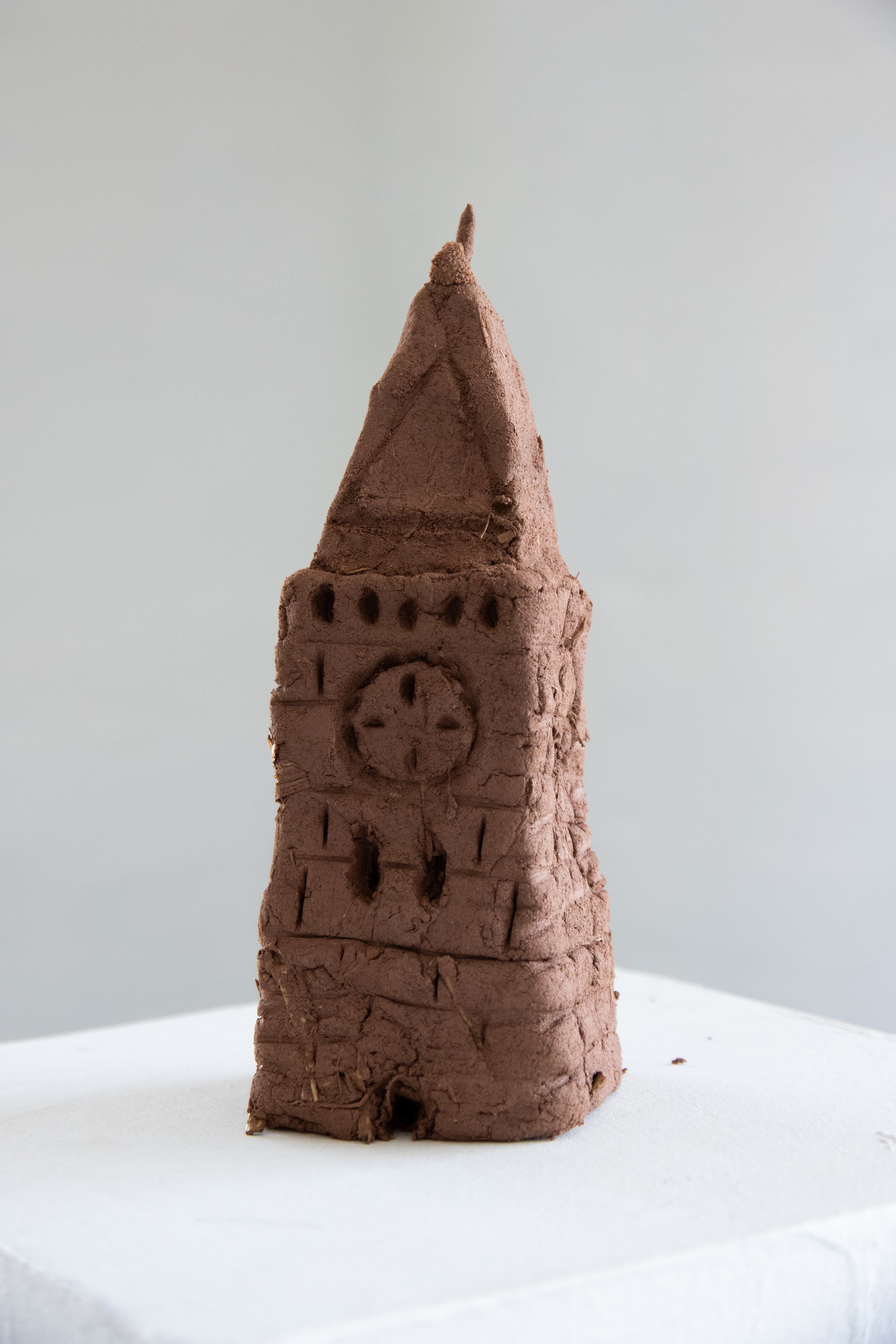
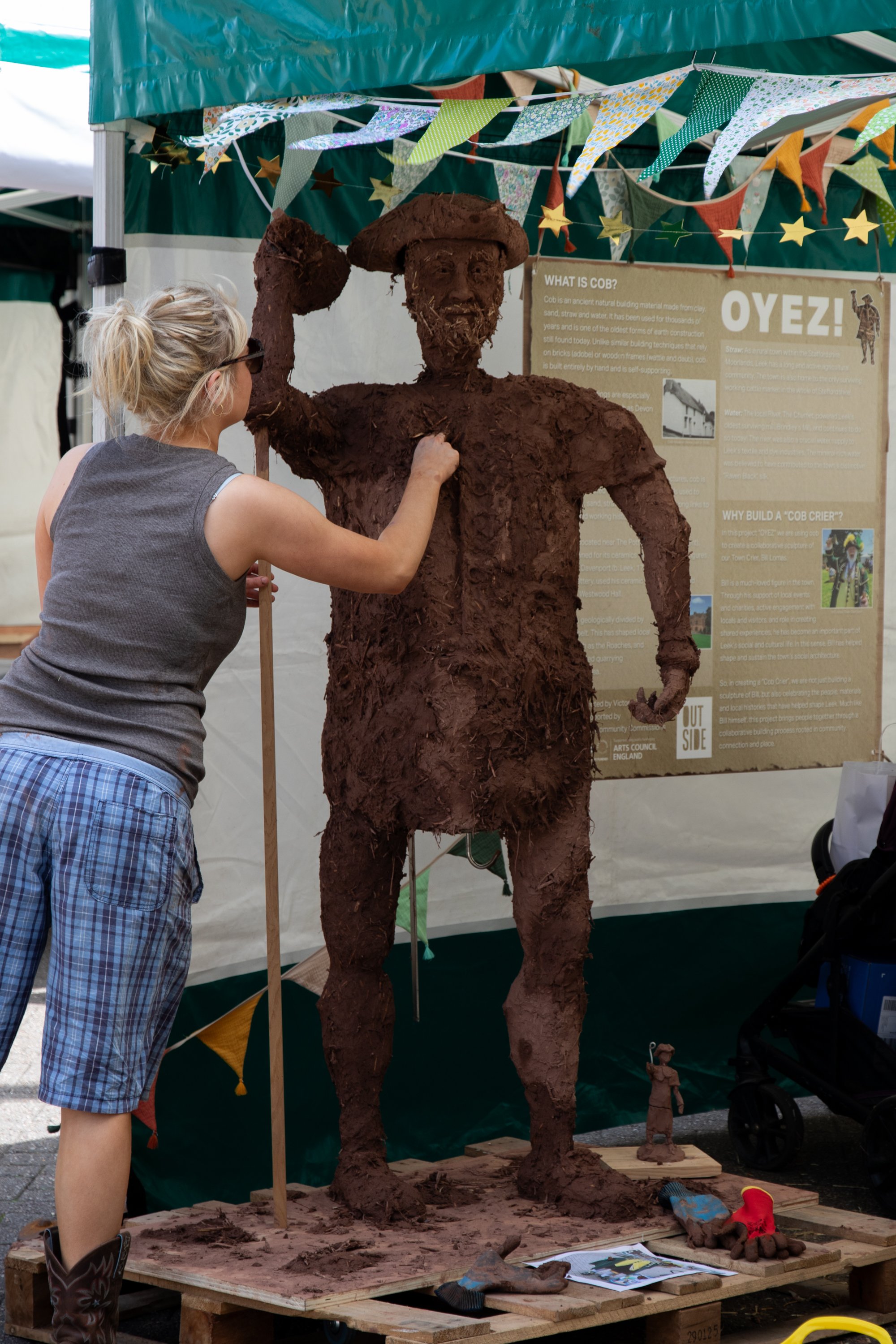
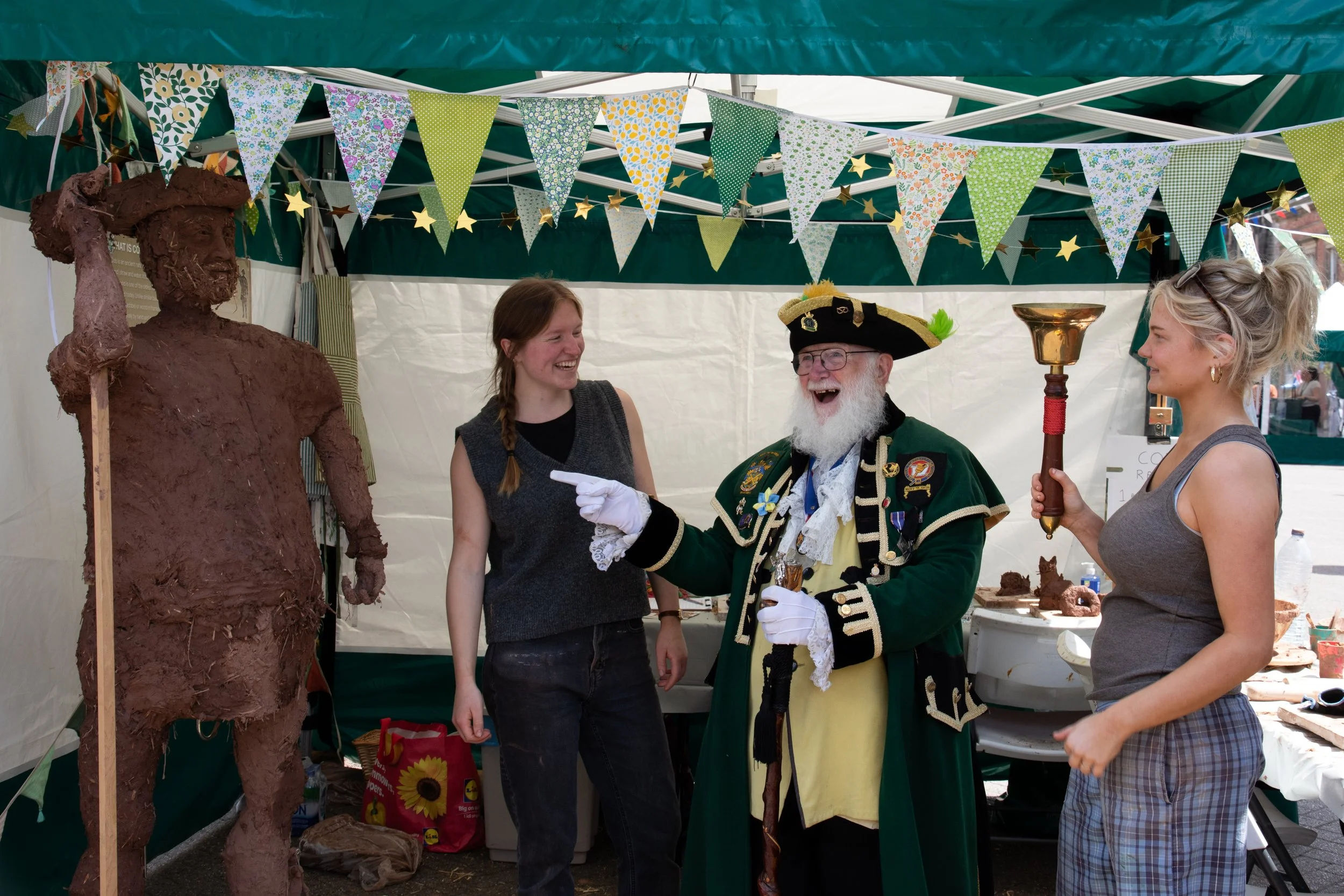
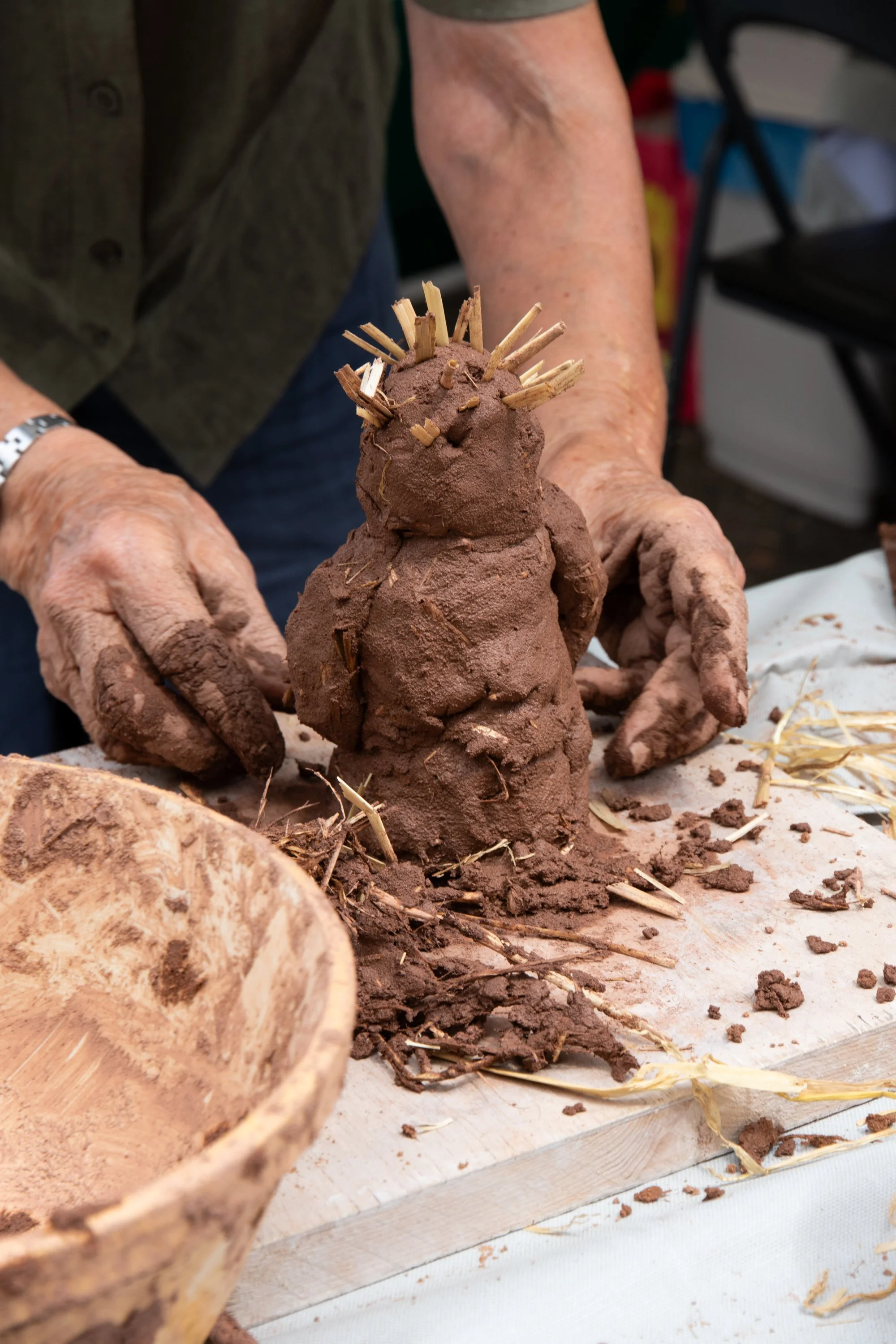
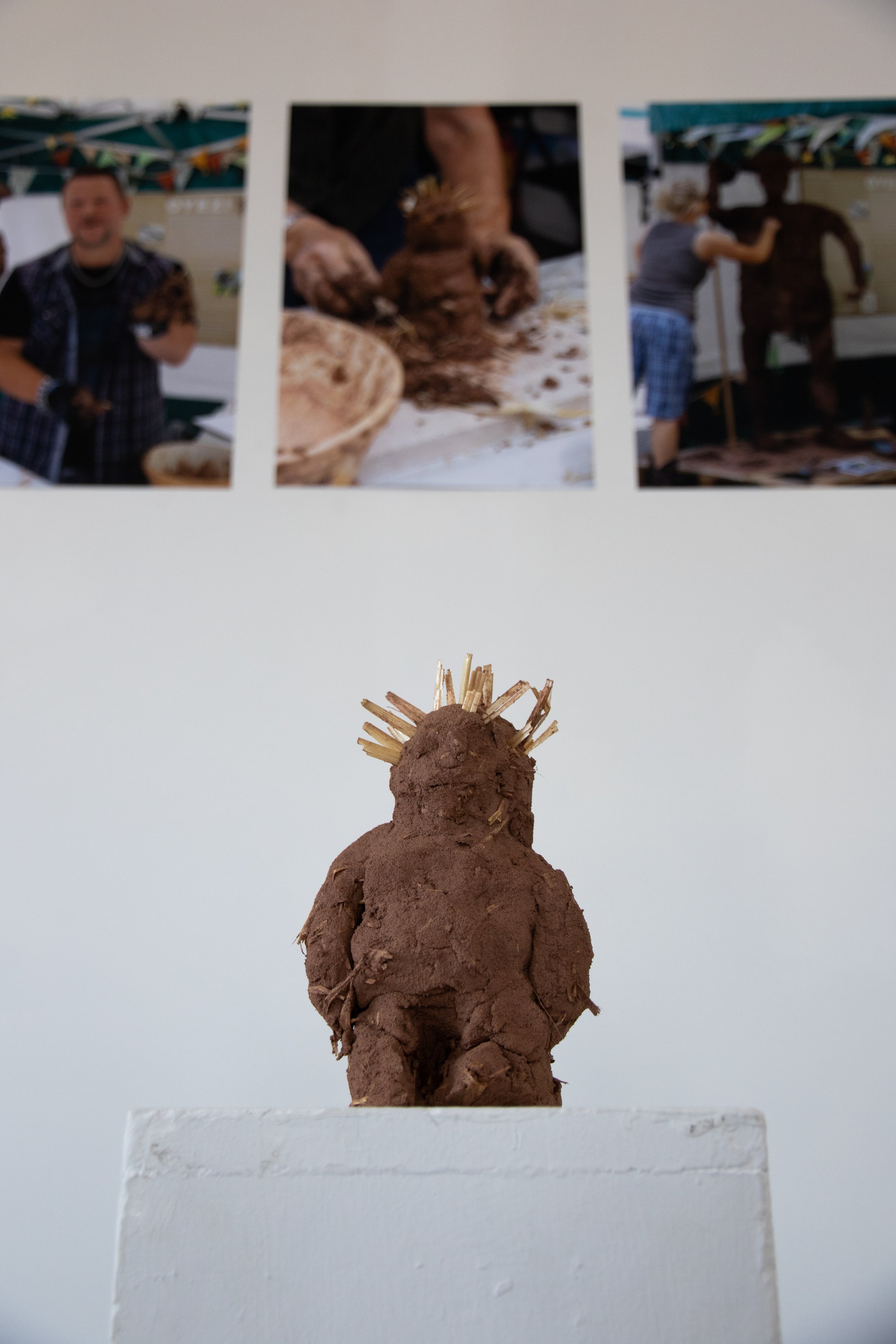
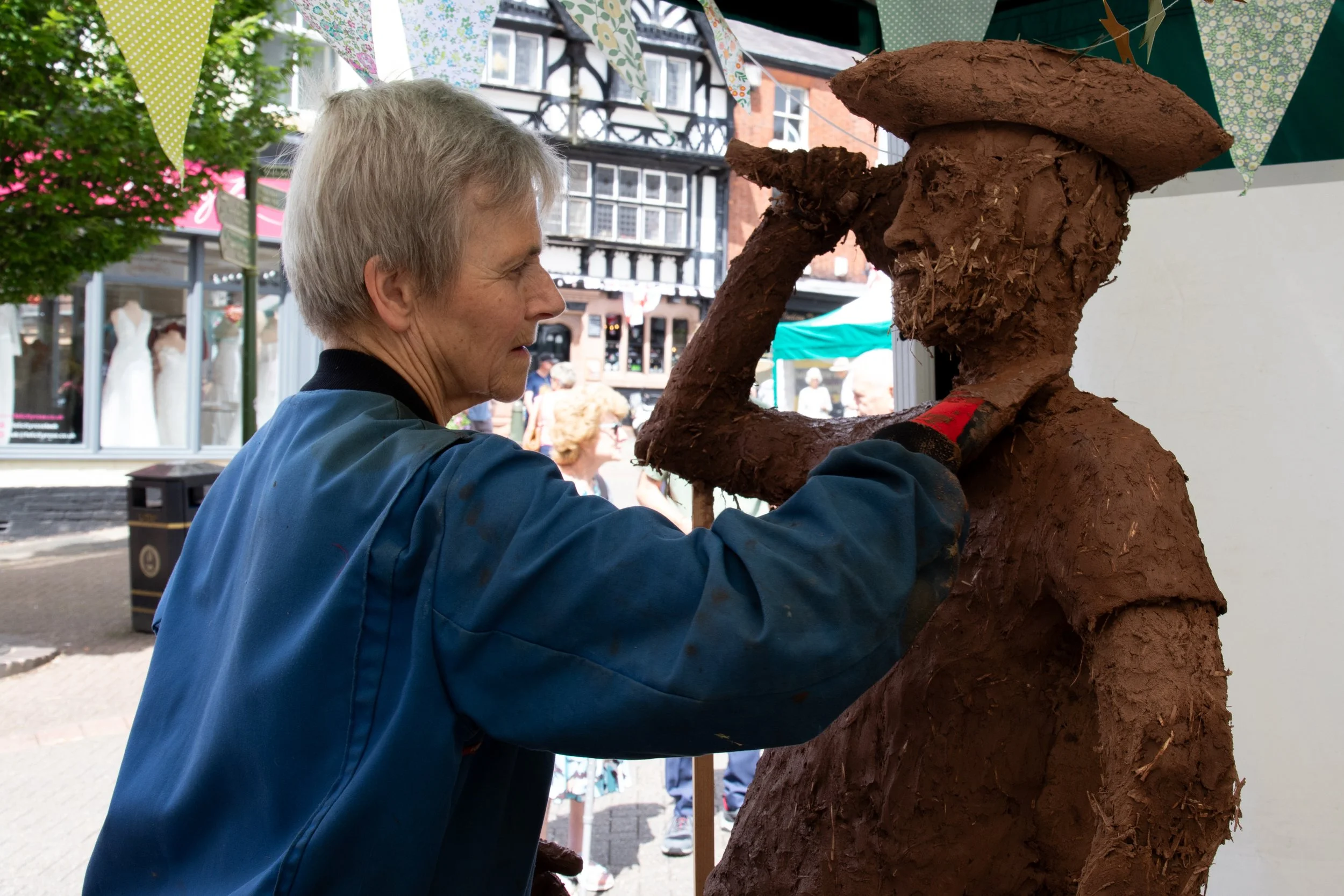
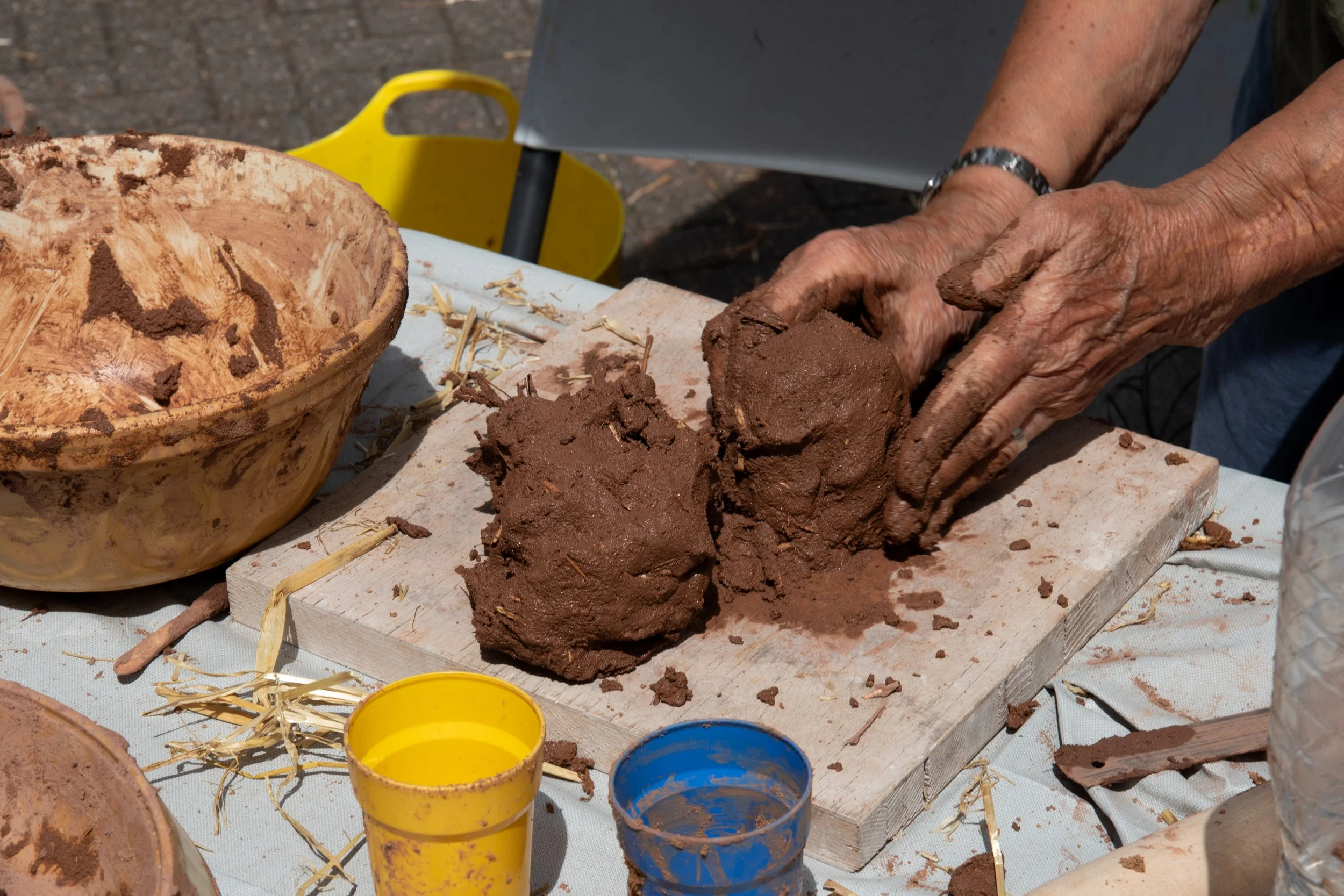
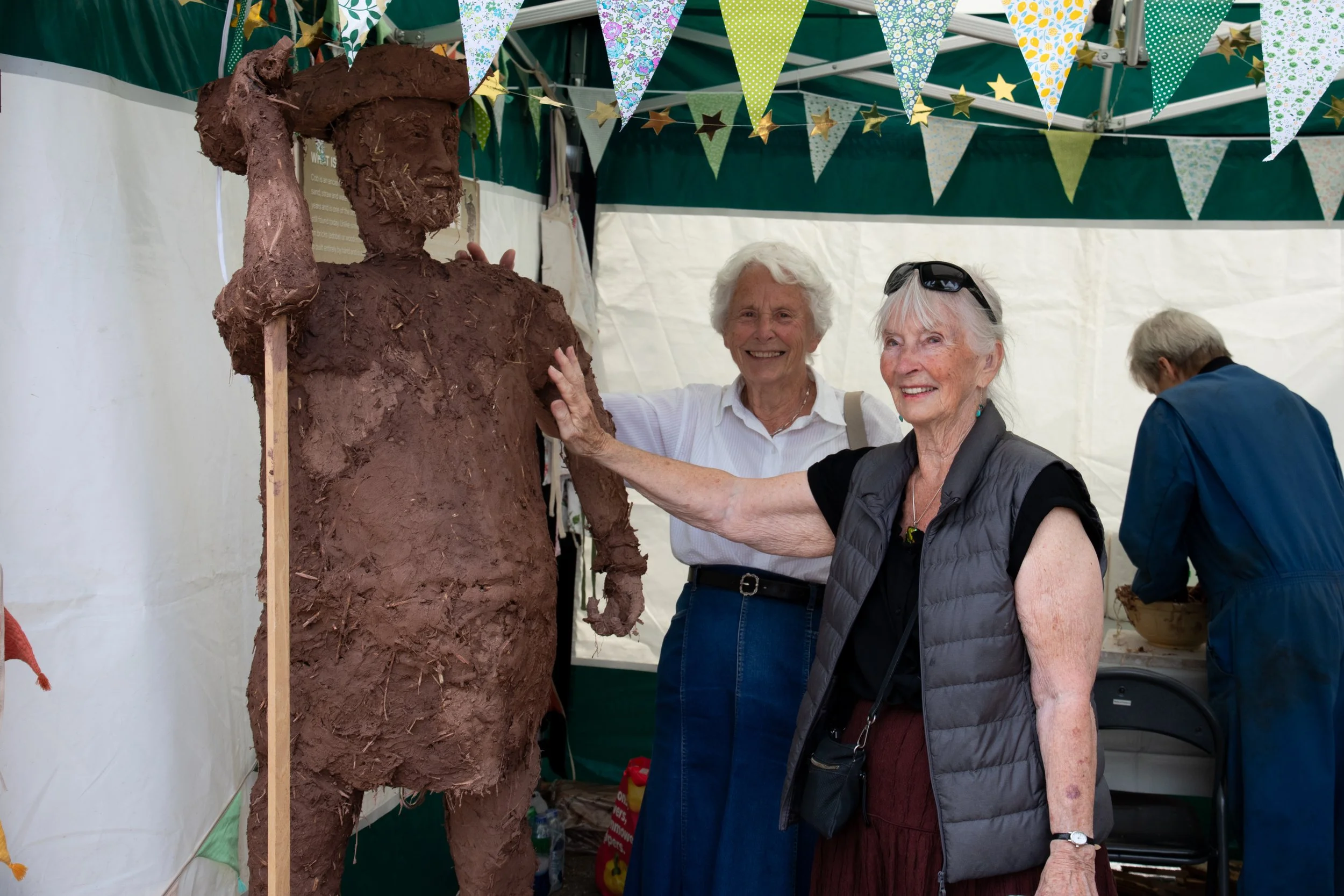
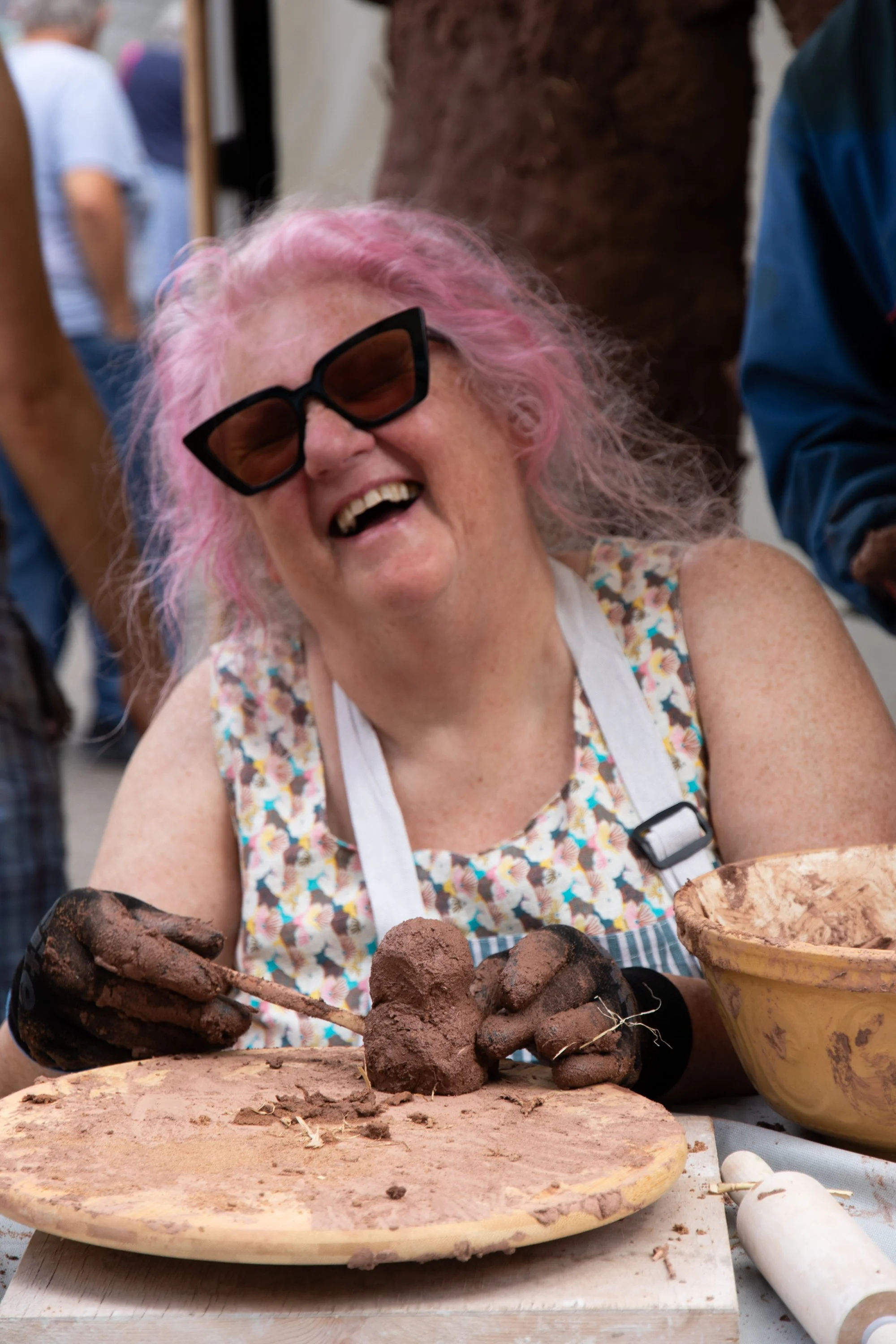
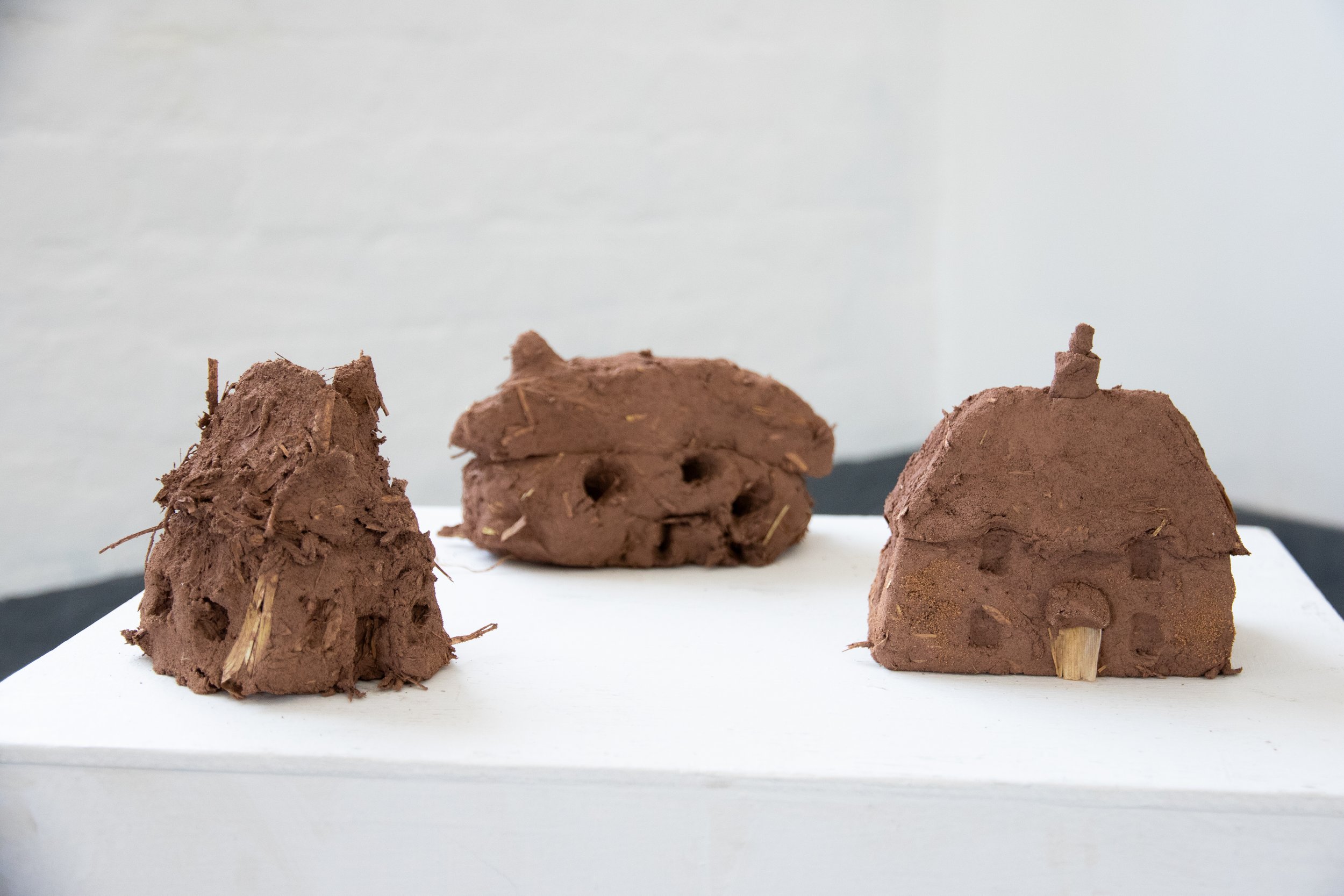
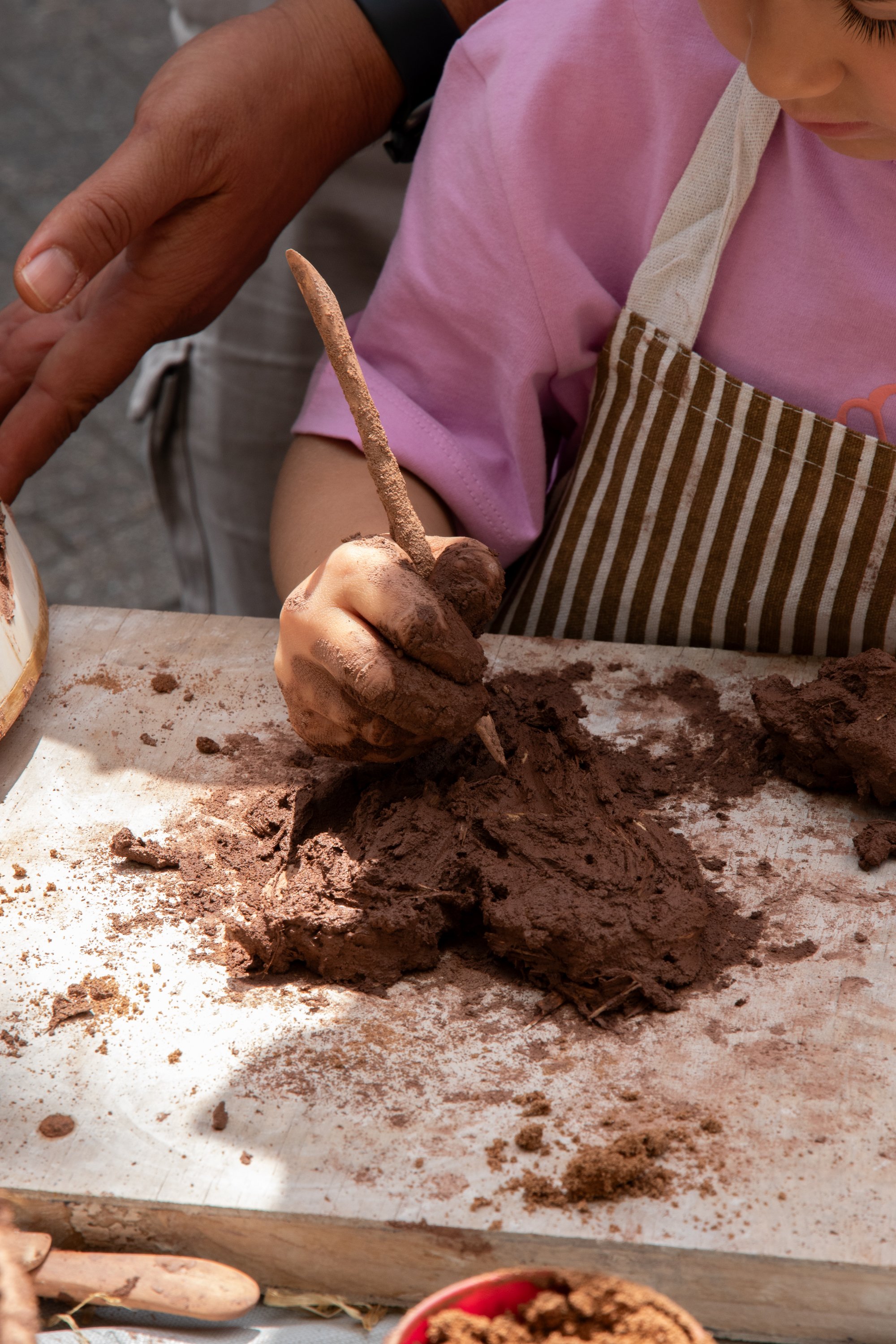
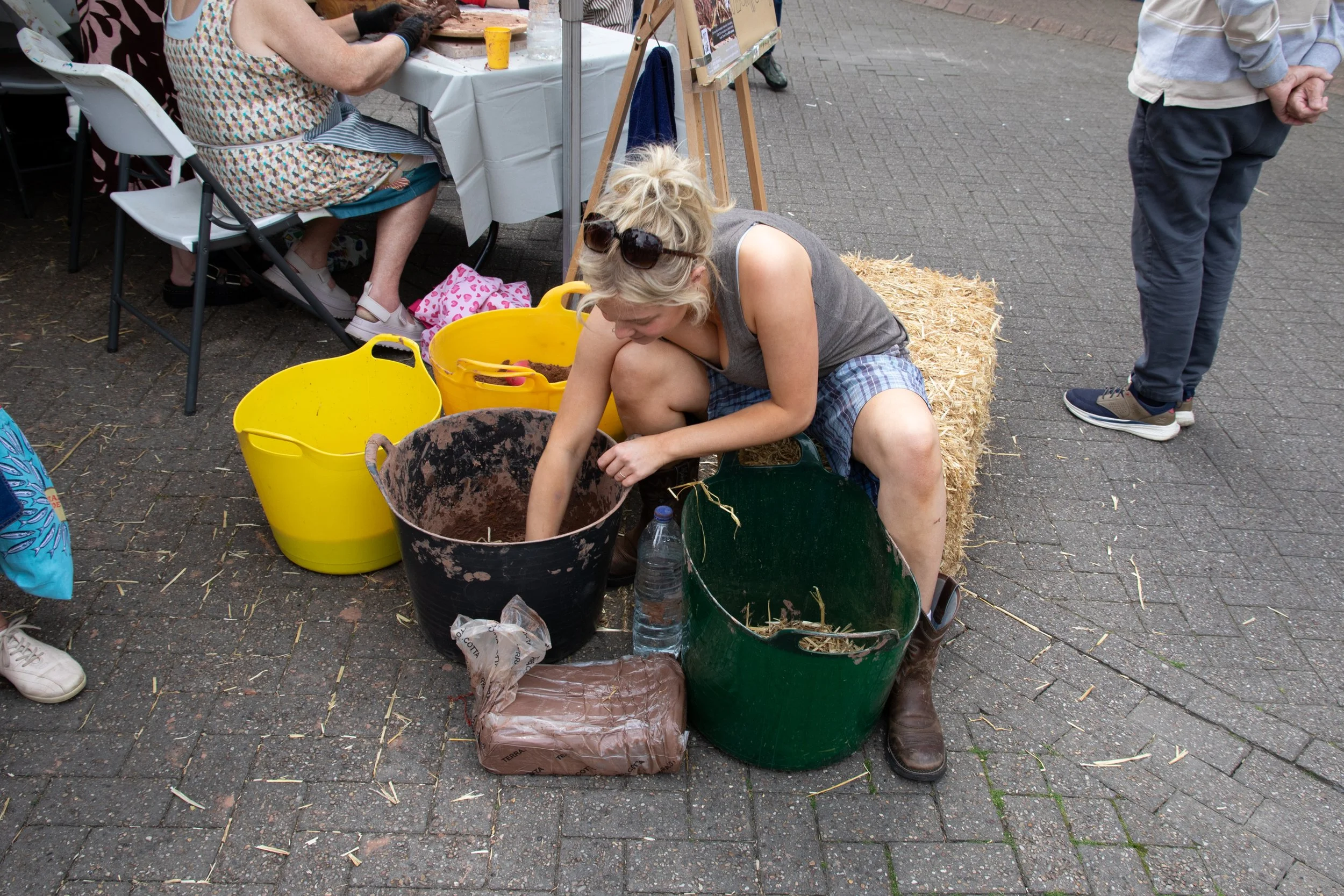
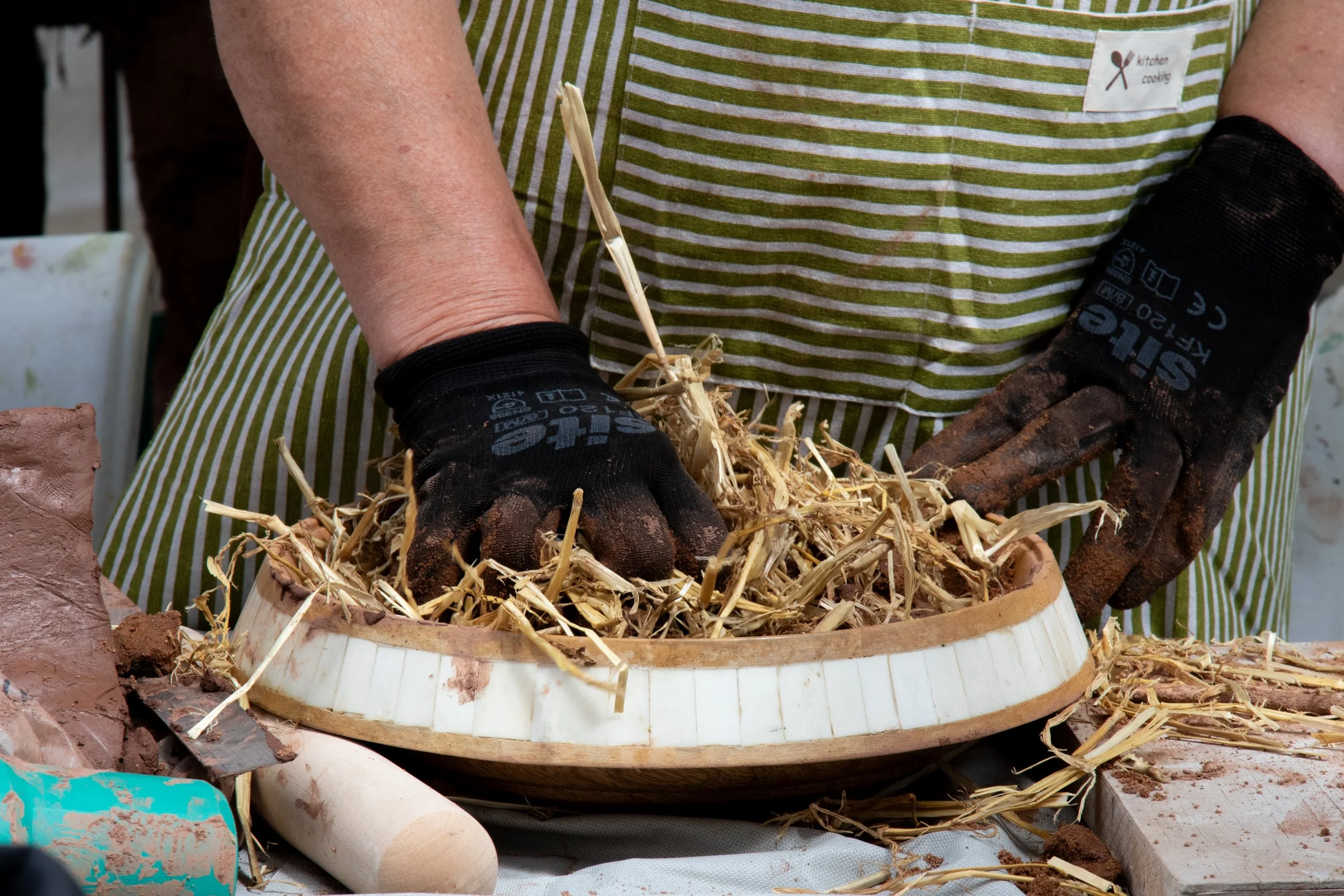
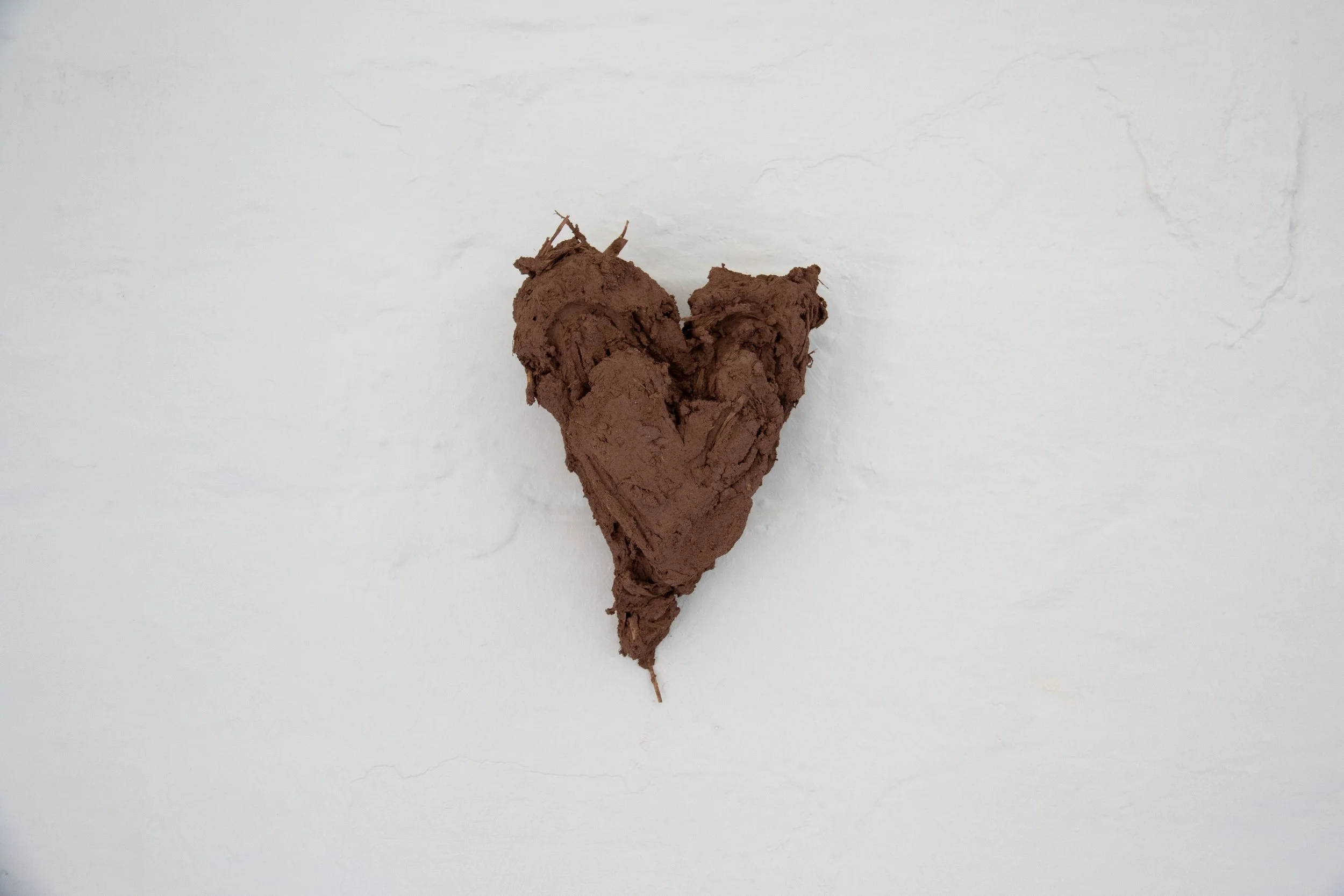
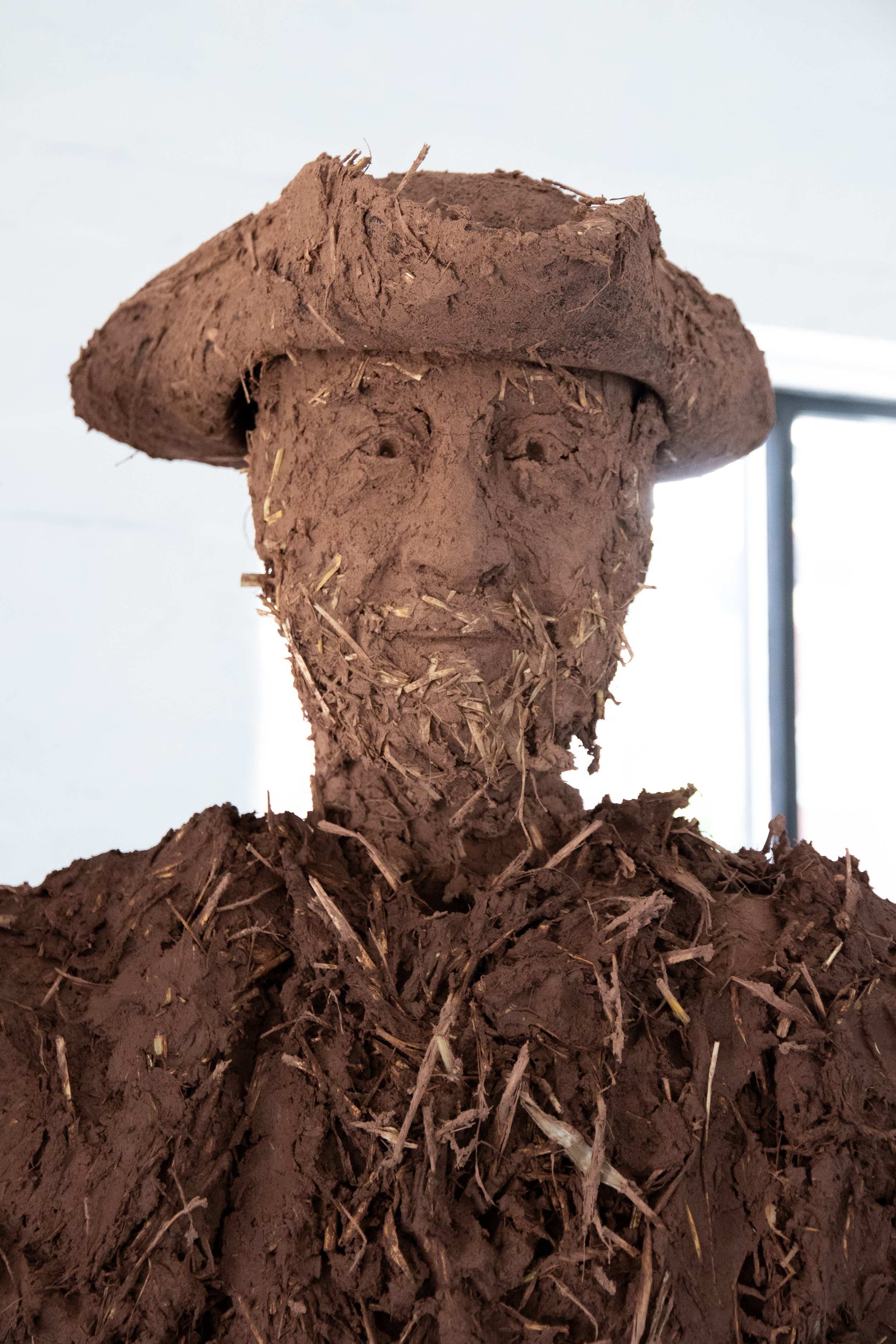
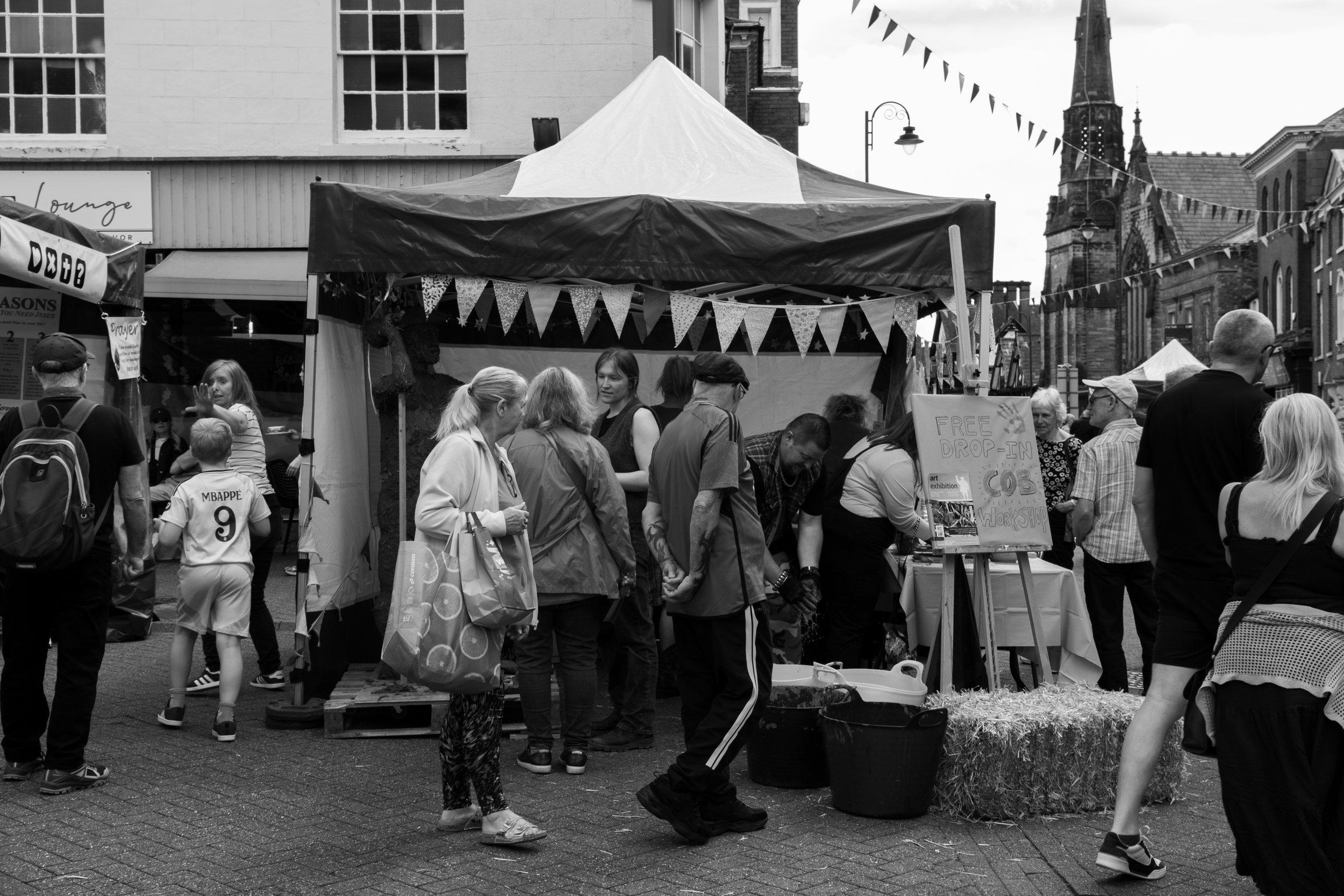
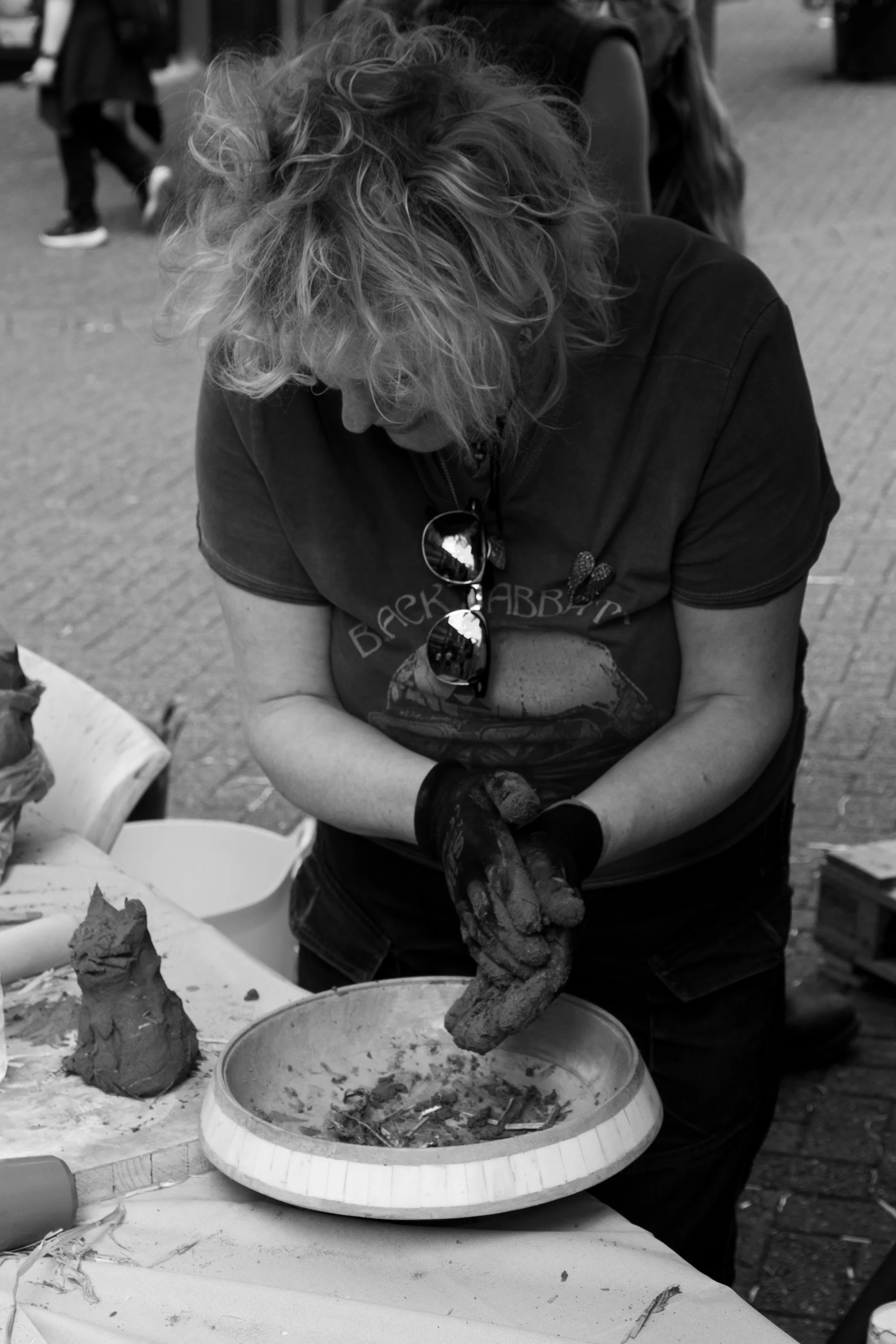
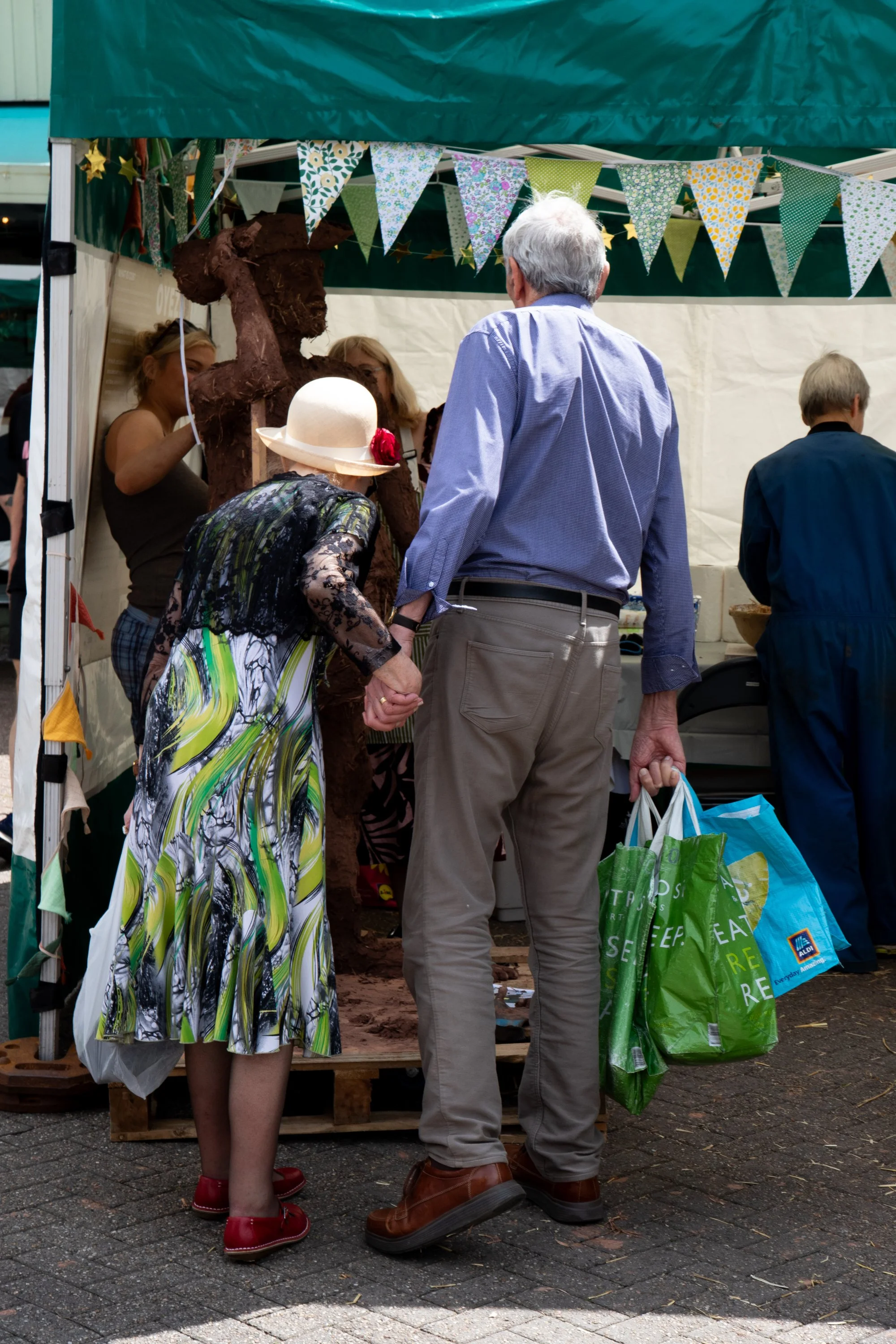
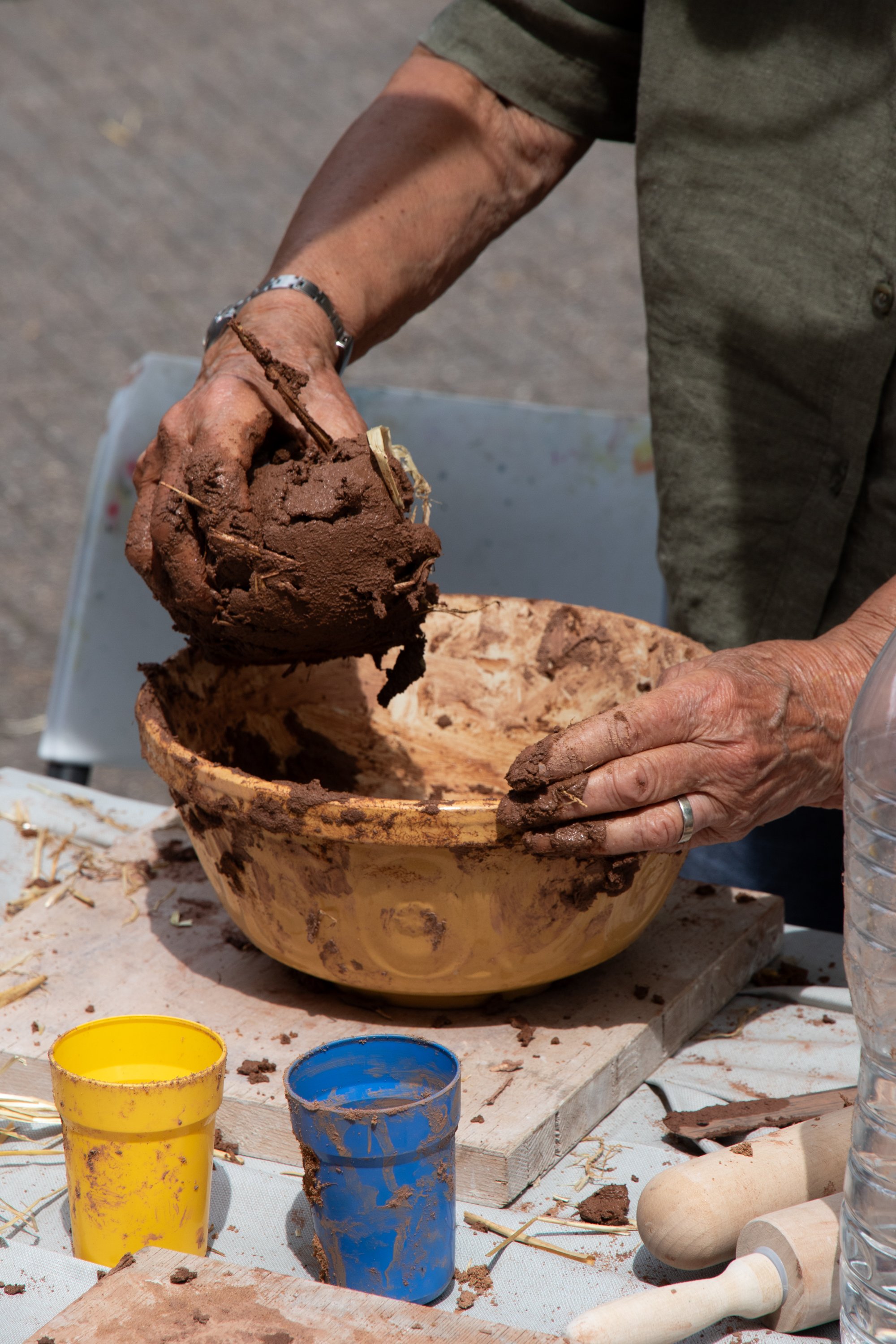
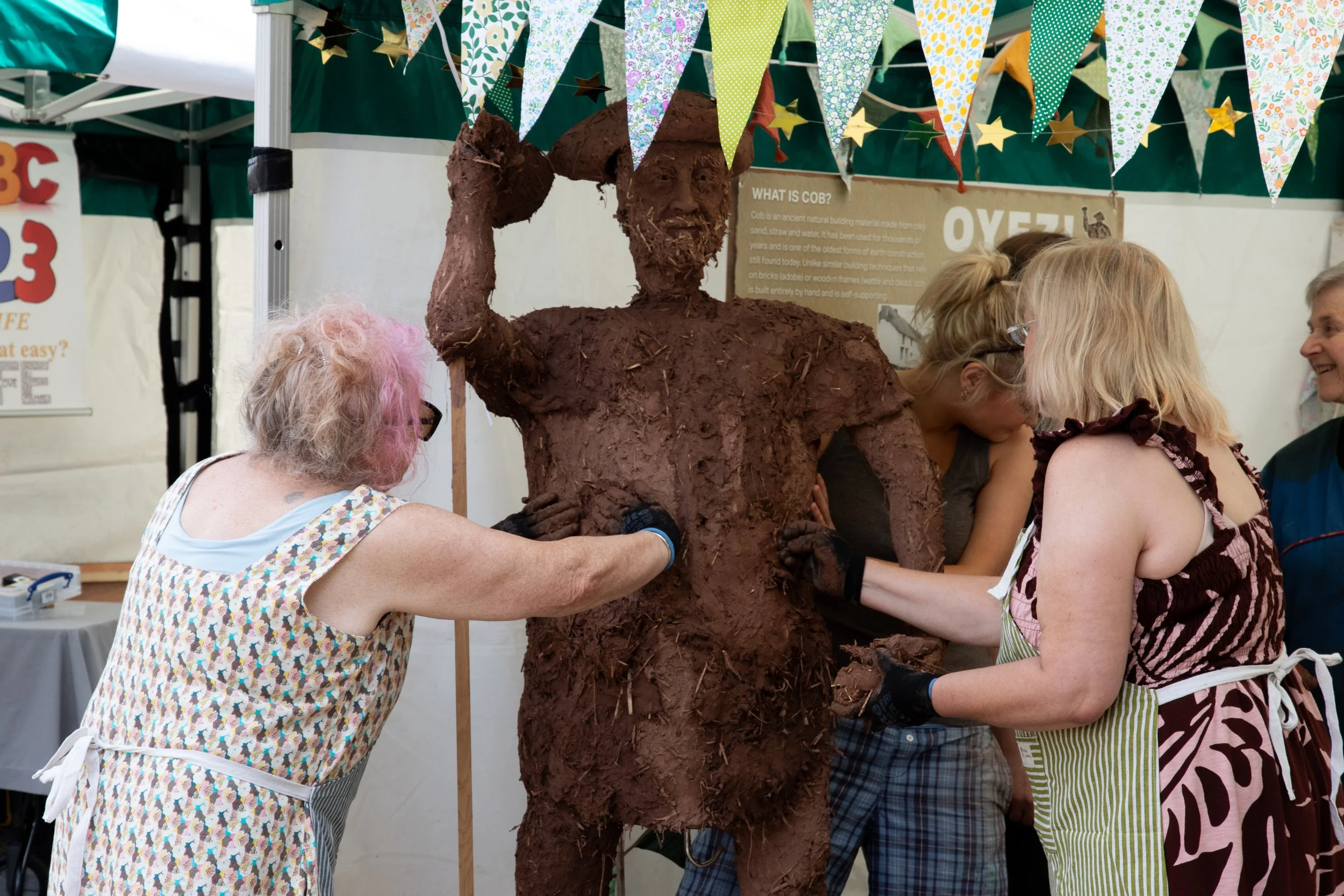
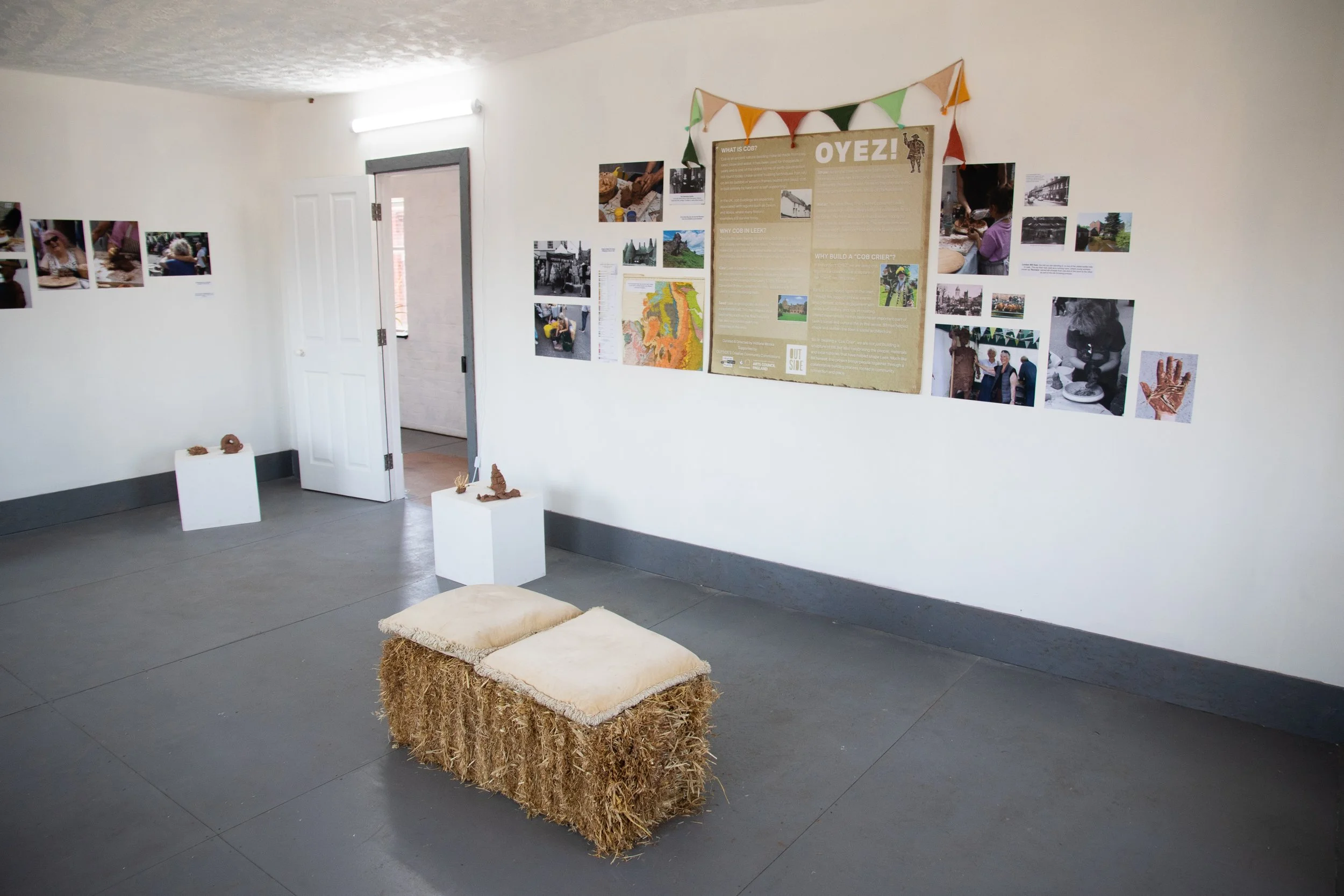
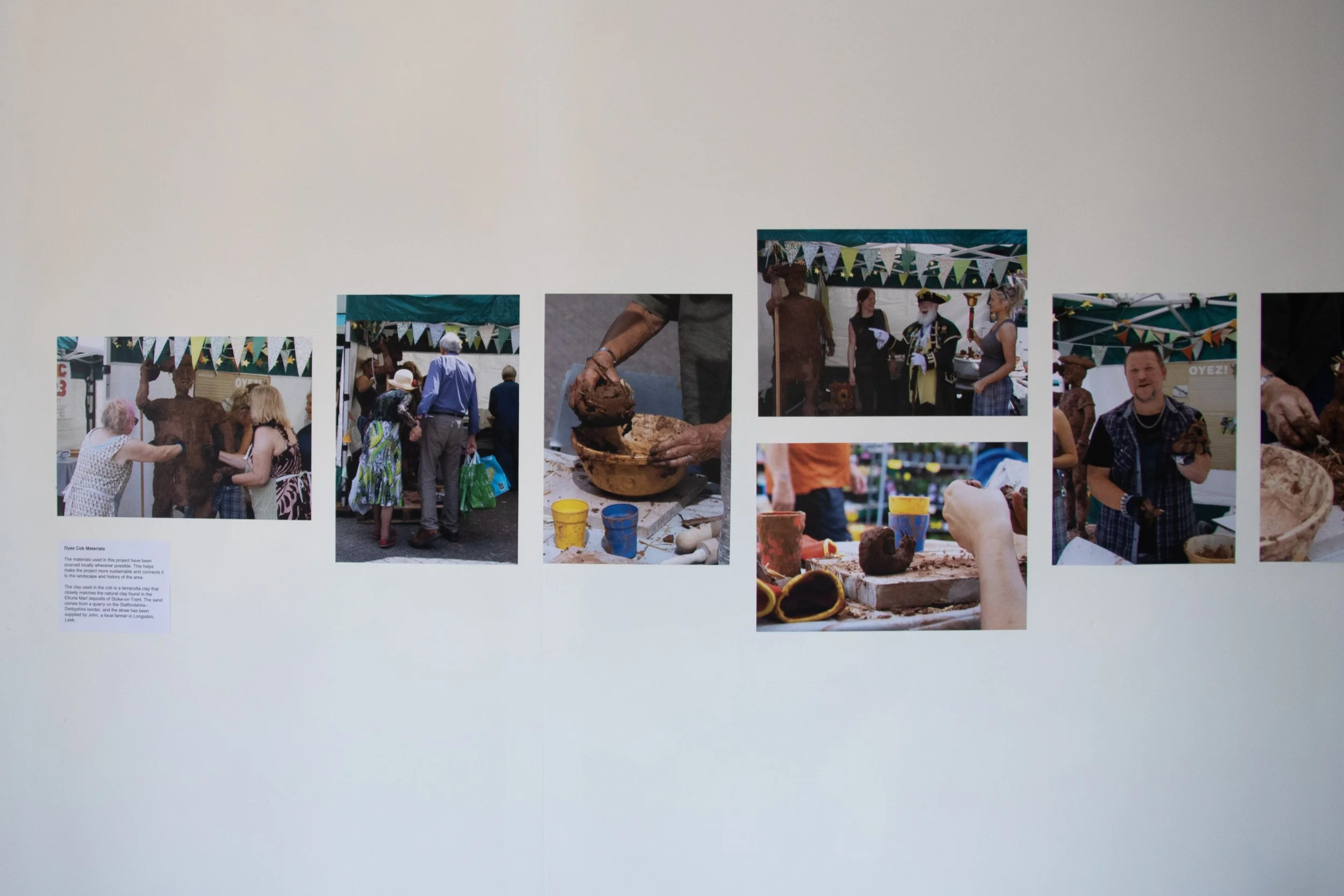
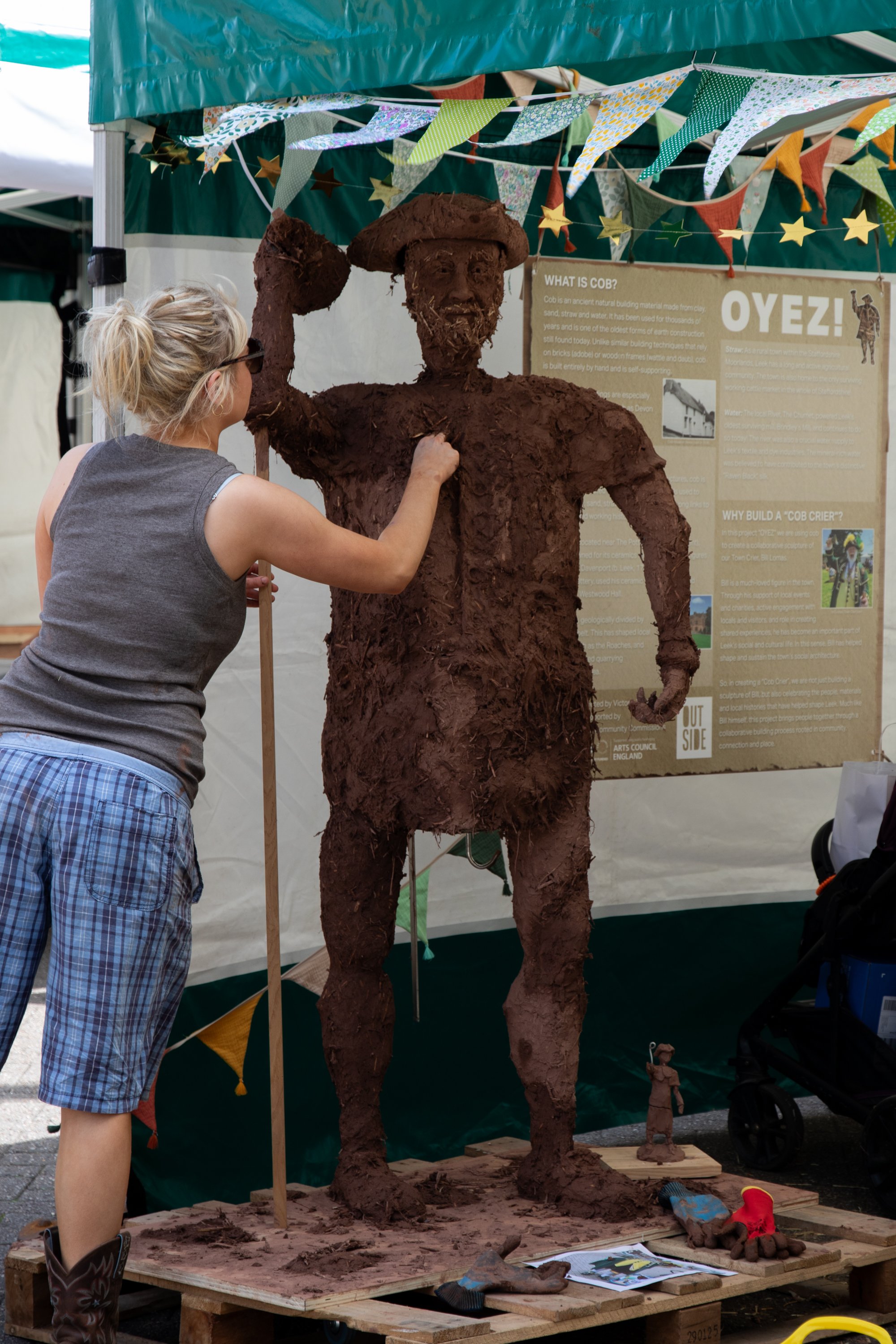
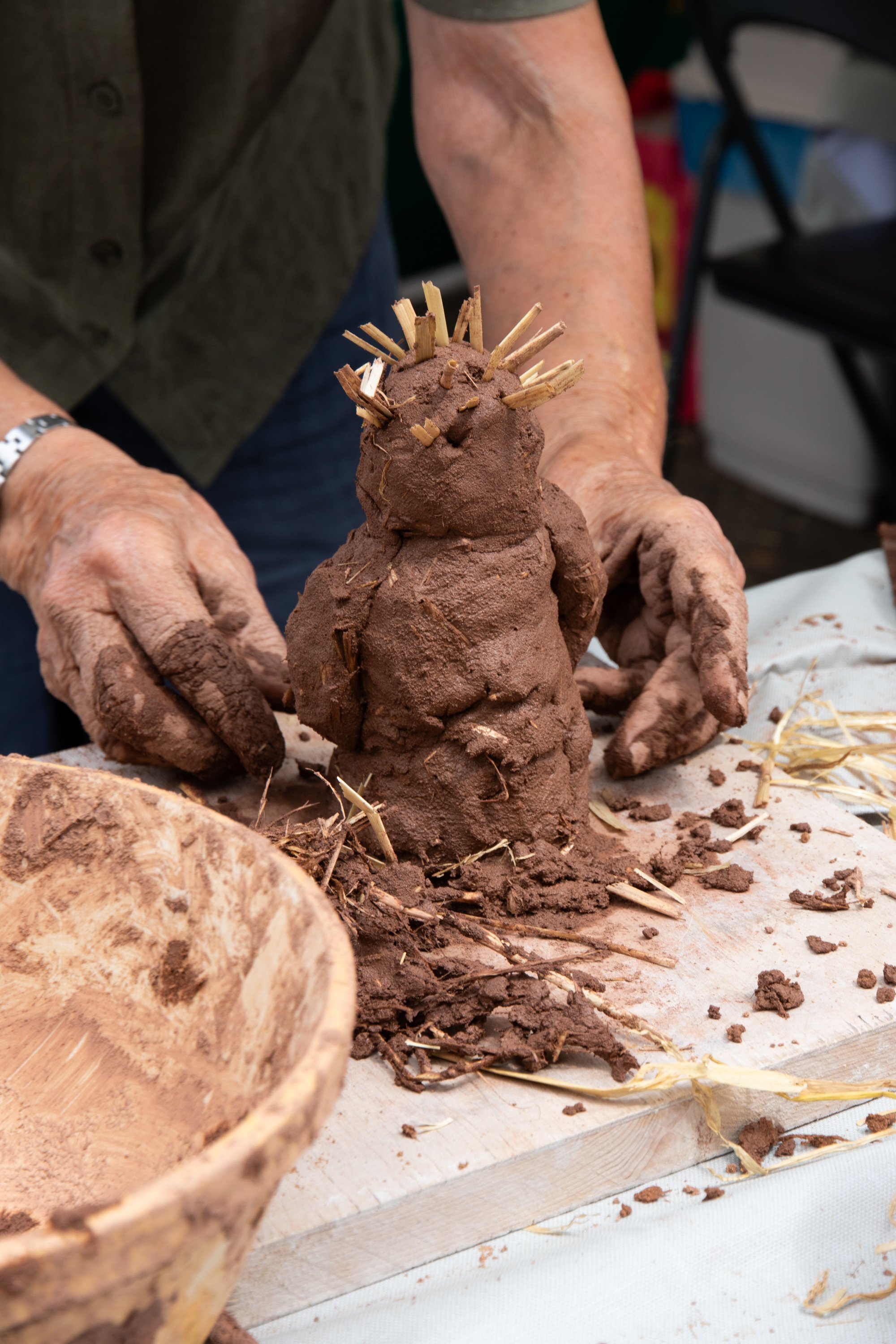
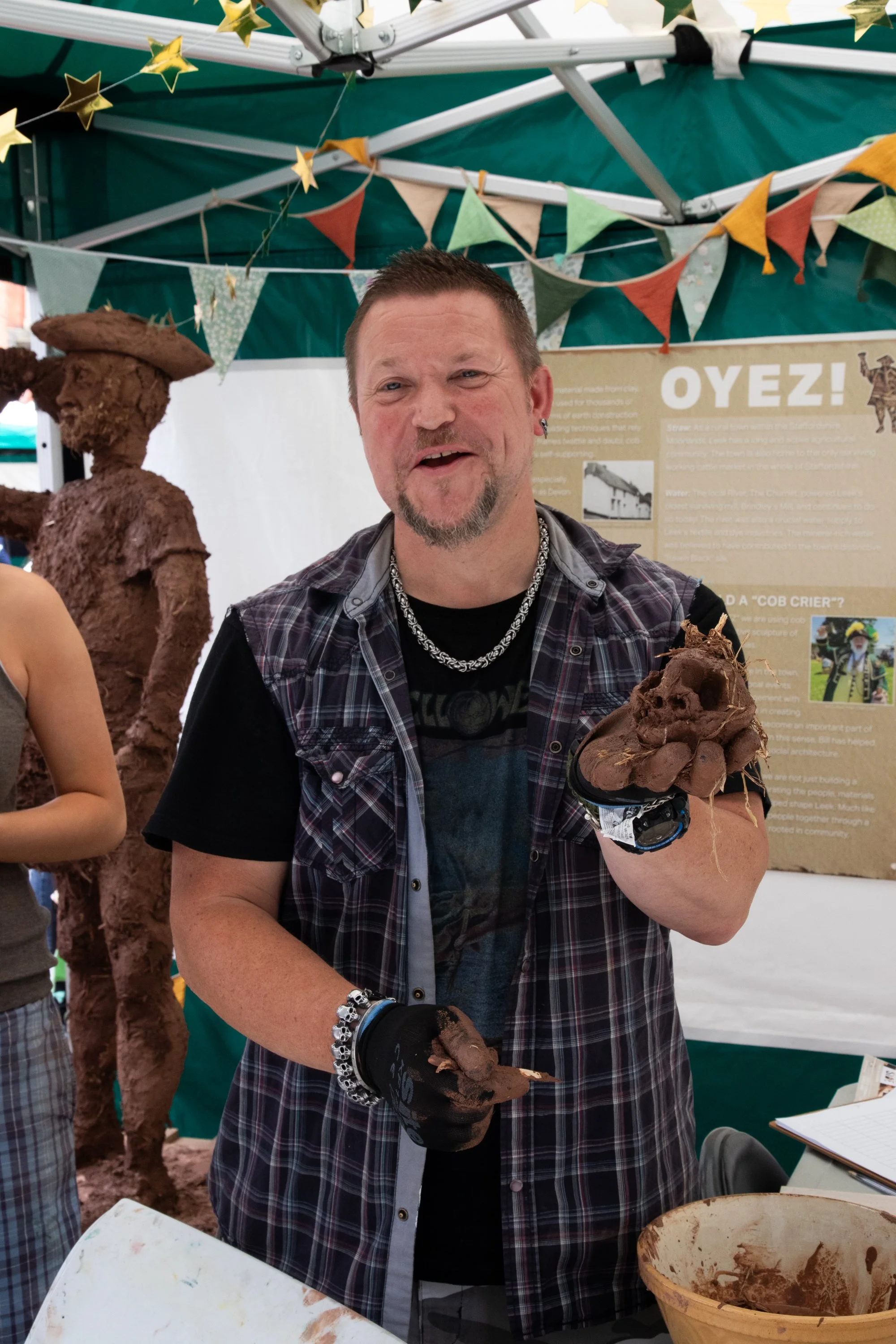
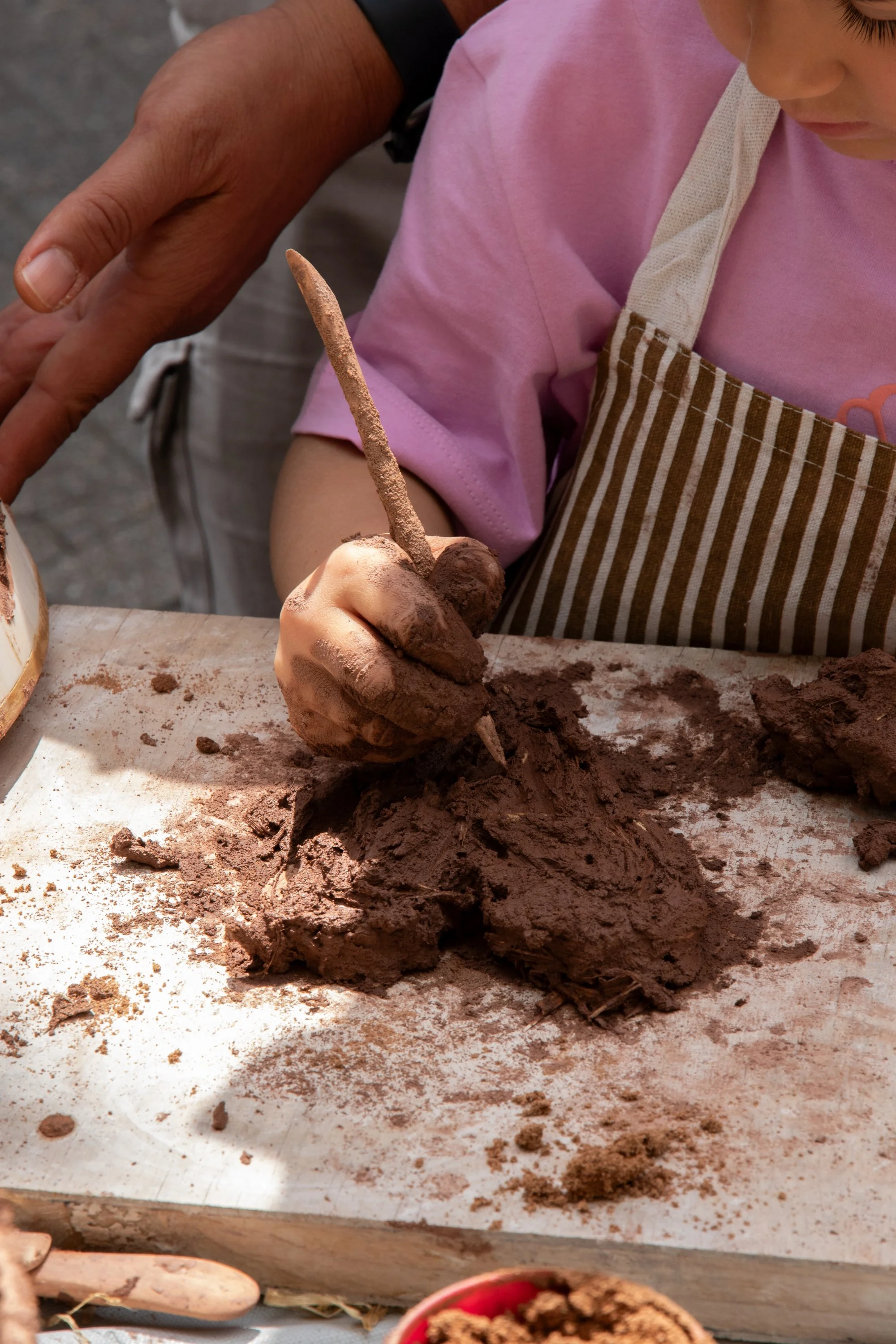
OYEZ is a collaborative community sculpture project celebrating the people, materials and histories that have helped shape Leek. Through a public cob-making workshop, participants worked together to create the Cob Crier, a life-size sculpture of Leek’s Town Crier Bill Lomas, alongside a series of smaller sculptures inspired by the themes of the workshop. The project culminated in a public exhibition bringing together the collaborative sculpture and the works created during the workshop.
This project was supported by OUTSIDE’S creative community commissions.
A Project by Victoria Motika
Photography by Ava Bromley
-
Workshop/ Exhibition Text:
WHAT IS COB?
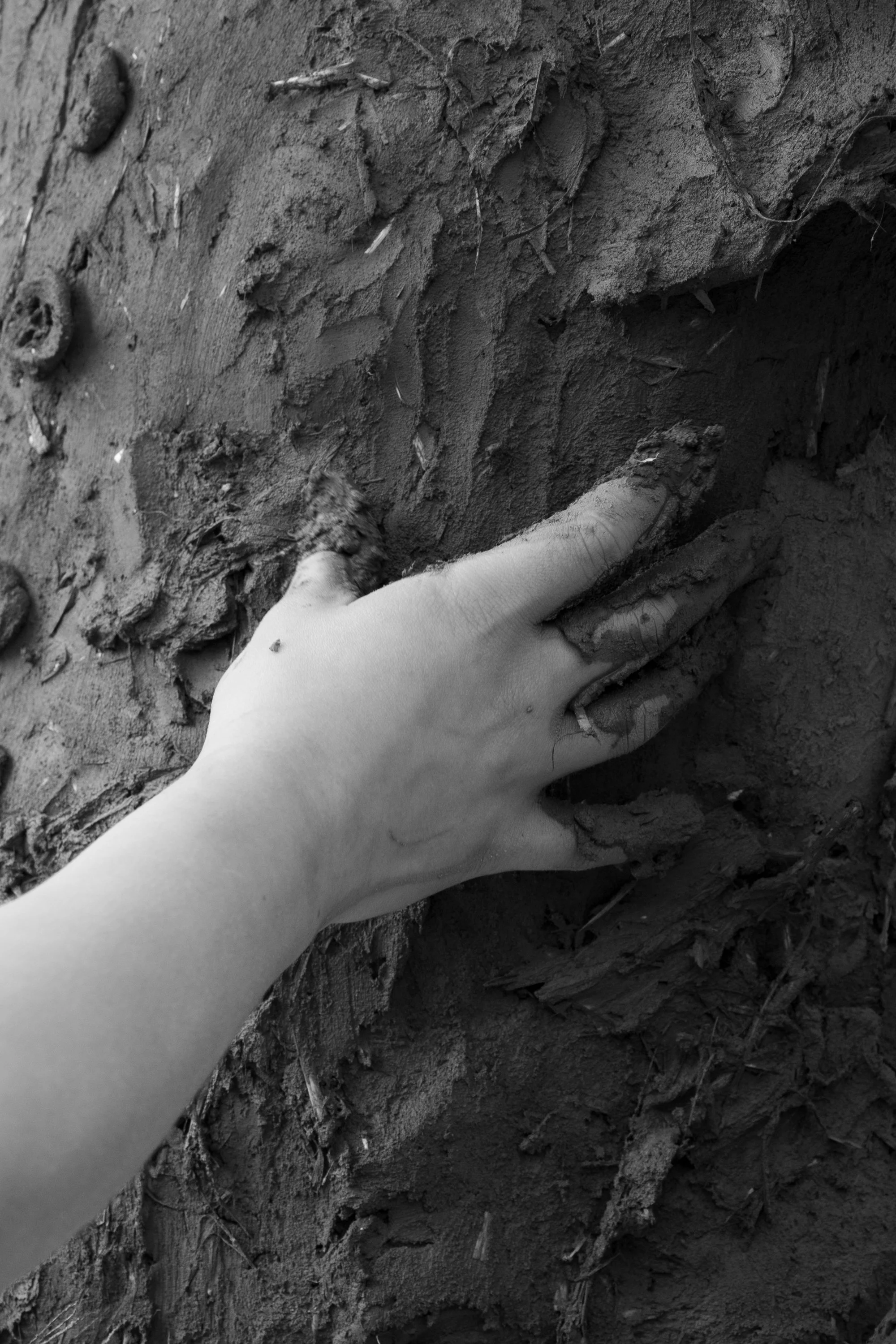
Cob is an ancient natural building material made from clay, sand, straw and water. It has been used for thousands of years and is one of the oldest forms of earth construction still found today. Unlike similar building techniques that rely on bricks (adobe) or wooden frames (wattle and daub), cob is built entirely by hand and is self supporting.
In the UK, cob buildings are especially associated with regions such as Devon and Wales, where many historic examples still survive today.
WHY COB IN LEEK?
Despite the town having no surviving cob structures, cob is still closely connected to the town. The materials used to make cob: clay, sand, straw and water, all have strong links to the landscape and working history surrounding Leek.
CLAY: Leek is located near The Potteries (Stoke-on-Trent), an area renowned for its ceramics industry. Industrial figures such as John Davenport (b. Leek 1765), founder of Davenport Pottery, used his ceramic successes to build Leek’s iconic Westwood Hall. The Davenport family also had strong ties to the industrial infrastructure of the town.
SAND: Leek is geologically divided by a sandstone belt. This has shaped local landmarks such as The Roaches, and has also supported quarrying industries in the area.
STRAW: As a rural town within the Staffordshire Moorlands, Leek has a long and active agricultural community . The town is also home to the only surviving working cattle market in the whole of Staffordshire!
WATER: The local river, The Churnet, powered Leek’s oldest surviving mill, Brindley’s Mill, and continues to do so today. The river was also a crucial water supply to Leek’s once-thriving textile and dye industry. The soft water was believed to have contributed to the town’s distinctive “Raven Black” silk.
WHY BUILD A “COB CRIER”?
In this project “OYEZ”, we are using cob to collaboratively create a life-sized sculpture of our Town Crier, Bill Lomas.
Bill is a much-loved figure in the town. Through his support of local events and charities, active engagement in with locals and visitors, and role in creating shared experiences, he has become an important part of Leek’s social and cultural life. In this sense, Bill has helped shape and sustain the town’s social architecture.
So, in creating a “Cob Crier”, we are not just building a sculpture of Bill, but also celebrating the people, materials and local histories that have helped shape Leek. Much like Bill himself, this project brings people together through a collaborative building technique rooted in community, connection and place.